1 Overview
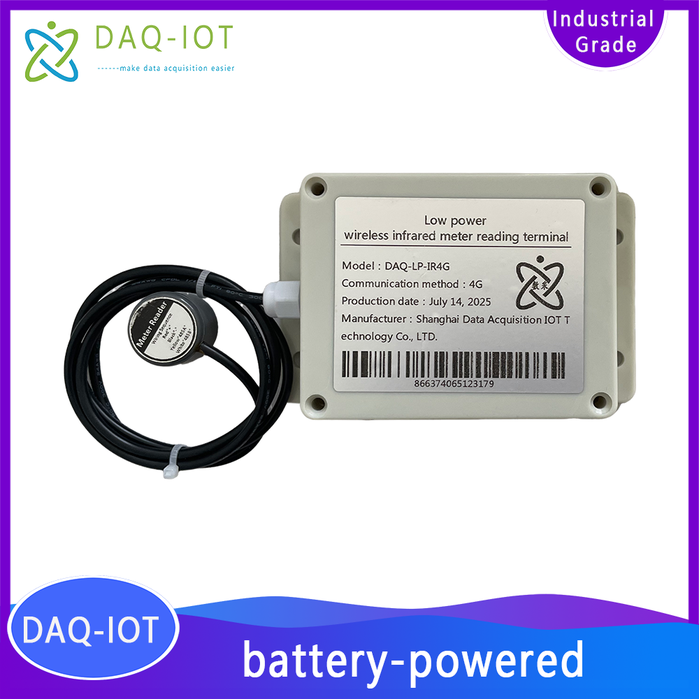
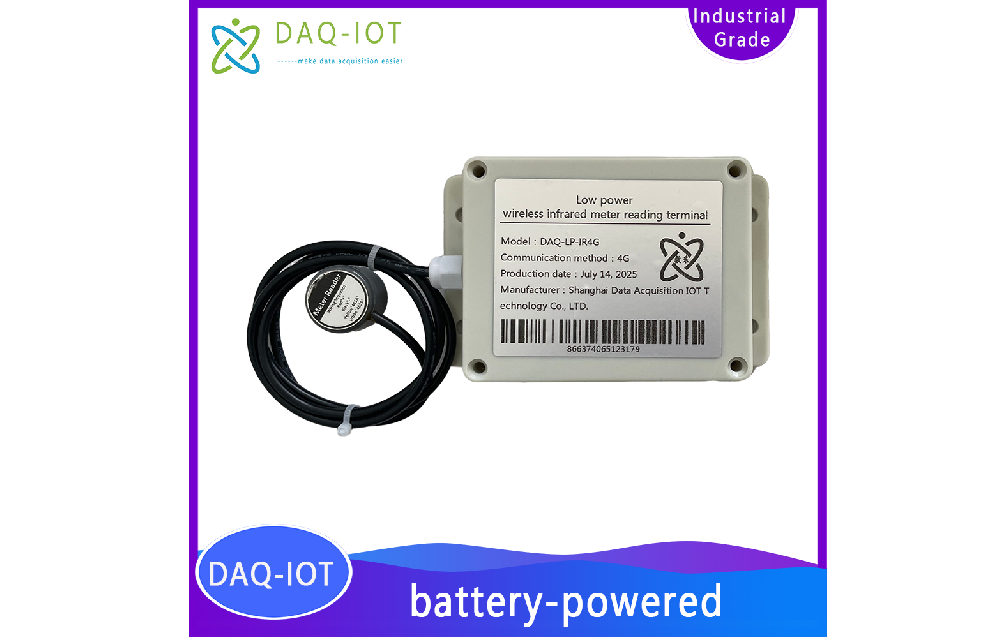
The SC-LP-IR4G wireless infrared meter reading terminal is a universal electric meter and gas meter reading terminal based on infrared communication, self-powered by batteries or solar panels or wired power supply, developed by Shanghai Shucai IoT Technology Co., Ltd. It can collect electrical energy data, voltage, current, power factor and other electrical parameter data of the State Grid electric meter.
The wireless infrared meter reading terminal adopts 4G communication mode to overcome the wireless communication obstruction caused by the special environment on site, greatly simplifying the on-site deployment time and reducing the construction cost . The working status of the equipment is divided into three states: sleep, collection and storage, and activation and reporting. After collecting data, it can automatically enter the low power consumption state to reduce power consumption and extend working time. This terminal supports meter reading scenarios of various meters such as electric meters and gas meters with infrared communication interfaces, and is suitable for electric energy meter data collection, smart city data collection, power monitoring data collection, energy conservation and emission reduction data monitoring system data collection, energy consumption monitoring system data collection, photovoltaic system data collection, intelligent monitoring data collection, robot data collection, smart security system data collection, cloud platform system data collection; electric energy meter calibration test bench; especially suitable for meter reading in the case where the lead seal of the total meter of the power supply bureau and the state grid electric meter is completely closed and no seal can be opened.
2 Product Features
Acquisition characteristics
l Infrared carrier frequency: 38 kHz
l Communication baud rate: 1200~115200 bps, adaptive according to the communication parameters of the energy meter
l Communication distance: ≤10 meters
l Communication angle: ≤15 degrees
l Communication angle: ≤15 degrees
l Infrared communication protocol: compliant with IEC62056-21 (IEC1107) and DL/645 standards
Electrical Characteristics
l Power supply: battery power supply/external power supply
l Optional external power supply voltage: 12V DC
l Battery capacity: 3.6V*38Ah
l Standby power consumption: less than 5uA@3.6V
l Working power consumption: 5~30mA@3.6V
l Transmitting power consumption: 50~80mA@3.6V
Communication characteristics
l Antenna type: external suction cup antenna or rubber stick antenna (internal antenna optional)
l Transmission mode: 4G/NB-IOT/LoRa optional
l Communication protocol: Default meter data transparent transmission, UDP communication mode, other protocols can be customized
l Data forwarding: any public network server
Structural characteristics
l Material: ABS plastic (shell)
l Main protection level: IP65
l Main body size: 130mm×95mm×60mm
l Main installation method: wall hanging or screw fastening
Work Environment
l Temperature -30°C~75°C, humidity 0~95% (non-condensing)
Storage Environment
l Temperature -40°C~90°C, humidity 0~95% (non-condensing)
3 Micro power operation mode
The wireless infrared meter reading terminal achieves power saving by working intermittently. The device is in standby mode most of the time, and only a very small part of the circuit continues to work to maintain a micro-power state. This part of the circuit will ensure the correct operation of the system time and the correct wake-up at the next activation time .
3.1 Interval time mode:
The interval mode means that the user specifies a certain interval for sampling and reports after sampling a certain number of times. The interval should be greater than 1 minute. For example, a user needs to collect data every 10 minutes and report after collecting 6 times. The following two parameters can be set as sampling interval (M): 10, sampling N times report: 6 .
3.2 Hourly mode
The hourly time mode is similar to the working principle of an alarm clock, and is set for the clock's 0 to 23 o'clock hours. The "sampling time" and "reporting time" represent 23 o'clock to 0 o'clock from left to right according to the hourly time .
4 Core advantages of products
Ø Comes with its own battery, no wiring required
Ø Simple installation and quick deployment help IoT projects to be implemented quickly
Ø Support any IoT cloud platform and provide data connection
Ø Support external multi-channel sensor probes
Ø Support analog, digital and switch quantity acquisition
Ø Support remote configuration of meter address and protocol to minimize on-site maintenance costs
5 Product Usage
This product is easy to install and can be deployed quickly. No on-site debugging is required, and remote cloud server debugging and configuration are supported. If you have any questions about the product, please contact after-sales personnel.
6 Application Cases
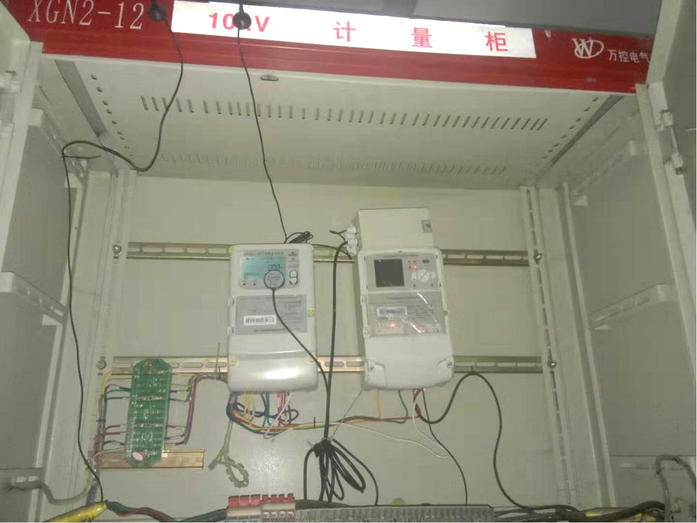
Industrial Park 10kV Meter Cabinet Meter Data Collection
In this case, battery power is used to collect the electric energy meter data of the 10kV meter cabinet in the industrial park. The collection frequency is every 2 hours, and the electric energy meter data is sent to the remote server via 4G.
7 Precautions
1)When the product is powered by batteries, in order to maximize the use of battery energy, there is no reverse polarity protection. Please pay attention to the positive and negative poles and do not connect them in reverse to avoid burning the device.
2)Communication can be carried out by aligning the infrared transmitting and receiving holes with the infrared device that needs to collect communication. During the communication process, please ensure that the communication distance and tilt angle are within the technical requirements, otherwise it will seriously affect the communication effect.
 ch
 English