1 Product Overview
Proper installation methods:
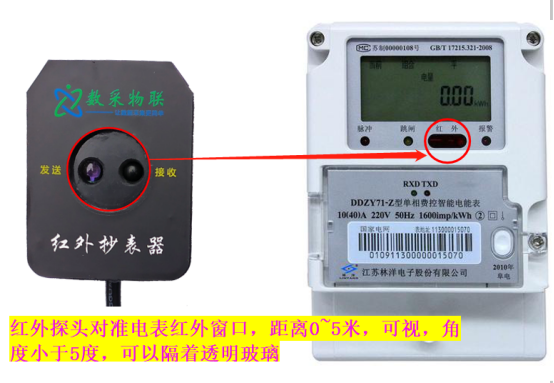
l The infrared transceiver needs to be aligned with the infrared window of the meter.
l The infrared transceiver can be placed 0 to 5 meters away from the meter.
l There needs to be no barrier between the infrared transceiver and the meter and it needs to be visible.
l The infrared transceiver and the meter can be separated by transparent glass.
l The installation Angle is less than 5 degrees.
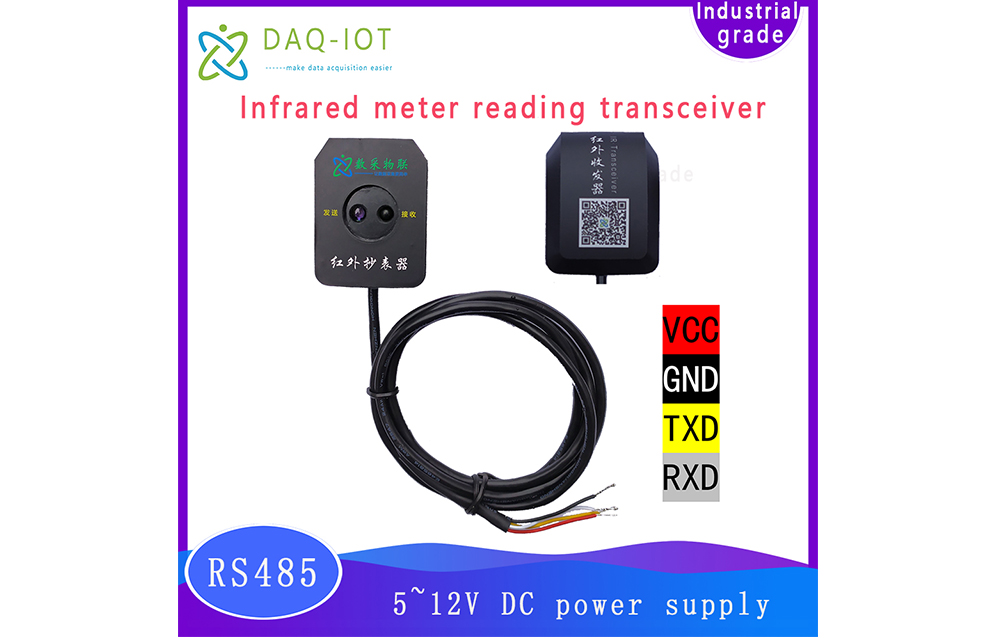
SC-GP-IR485 infrared meter reading transceiver is a product based on infrared communication, RS485 transmission and DC wide voltage power supply launched by Shanghai Datai Internet of Things Technology Co., LTD. This product is infrared meter reading photoelectric probe, for general electric meters, gas meters and so on. This product can collect electric energy, voltage, current, power factor and other electrical parameters of the State grid meter data.
Introduction to the principle of infrared meter reading: The infrared photoelectric probe uses the infrared light port to periodically read the parameter information of the smart meter and upload it. The infrared meter reader has the function of infrared signal modulation and demodulation, modulates the binary digital signal into 38KHz frequency pulse sequence, and drives the infrared emitting diode to send out in the form of infrared light pulse. The transceiver converts the received optical pulse into an electrical signal, then sends it to the demodulation circuit for demodulation after amplification and filtering, and then converts it into a binary digital signal. After the packet is parsed, the signal is sent to the server according to the fixed frame (such as json).
This product supports various meter reading scenarios with infrared communication interface, such as electric meters, gas meters, flow meters and other meters. This product is suitable for energy meter data collection, smart city data collection, power monitoring data collection, energy conservation and emission reduction data monitoring system data collection, energy consumption monitoring system data collection, photovoltaic system data collection, intelligent monitoring data collection, robot data collection, intelligent security system data collection, cloud platform system data collection and energy meter verification test bench. This product is especially suitable for the power supply bureau of the state grid meter master meter seal is completely closed, and can not open any seal of the situation of meter reading.
2 Order Specifications and Selection
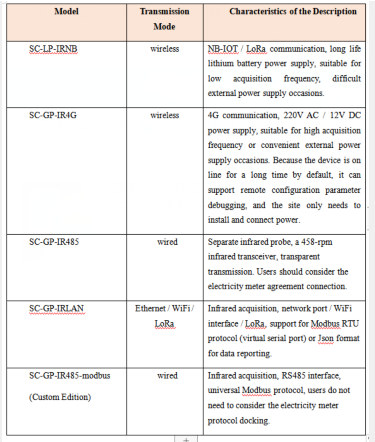
3 Service Concept
Our company solemnly promise you:
You buy more than just products, but also meticulous and thoughtful technical support!!!( =^_^= )
If you purchase our wireless products, we will provide free remote guidance, remote configuration and debugging service, and send the data to the cloud platform specified by the customer.
Free IOT solution consulting services!
4 Product Features
Line Sequence Definition
Red: + 12V Black: GND Yellow: 485A White: 485B
Note: Please contact us to customize the 24V power supply version
Length of Line: 1 meter
Acquisition characteristics
l Infrared carrier frequency: 38 kHz
l Communication wave rate: 1200~115200 bps, adaptive according to the communication parameters of the electricity meter
l Communication distance: 10 meters
l Communication Angle: 15 degrees
l Infrared communication protocol: Transparent transmission
Electrical Characteristic
l Power supply mode: 5~12V DC power supply (with reverse connection protection function of power cable)
l Working power consumption: less than 0.5w
l Emission power consumption: 20 ~ 50 mA @ 12 V
Communication Characteristics
l Transmission mode: RS485 transparent transmission
l Paud rate: 1200~115200bps, adaptive
Structural Characteristic
l Material: ABS plastic (enclosure)
l Protection level: IP 64
l Body size: 48mm 37mm 15mm
l Installation method: paste / magnetic suction installation
Working Environment
l Temperature-30°C~75°C, humidity of 0~95%
Storage Environment
l Temperature-40°C~90°C, humidity of 0~95%
5 The Core Advantages of the Product
Ø Infrared non-contact acquisition, which does not affect the instrument body
Ø Small size
Ø Simple installation, fast deployment, help the Internet of things project quickly landing
Ø Free gifts of multiple meter reading and debugging software and electricity meter communication protocol documents
6 Free Meter Reading Debugging Software
A total of three meter reading debugging software:
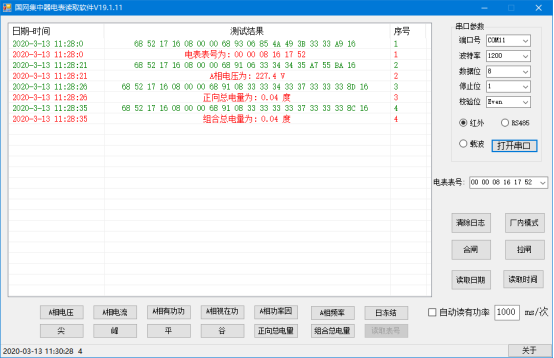
State grid concentrator electricity meter debugging software
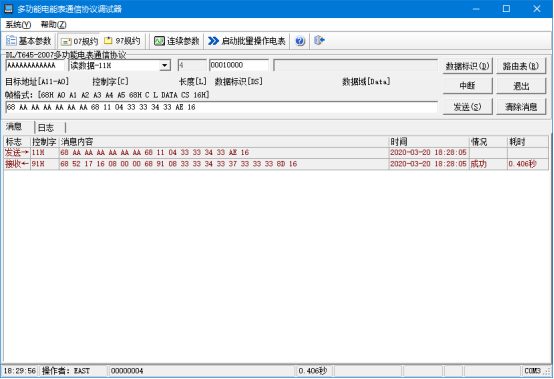
Multi-function electricity meter communication protocol debugger
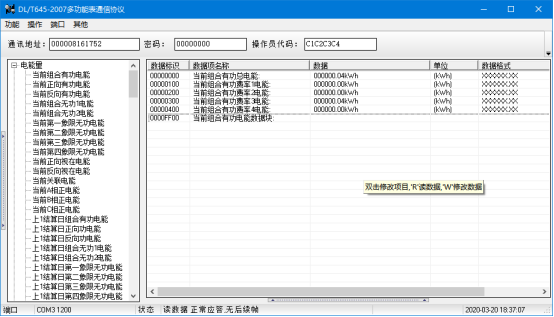
DL / T645-2007
Complimentary document: DLT645-2007 multi-function electricity meter communication protocol 2010.pdf
Software download method: follow the wechat official account "Digital", enter the product information menu, download relevant information.
7 Application Cases
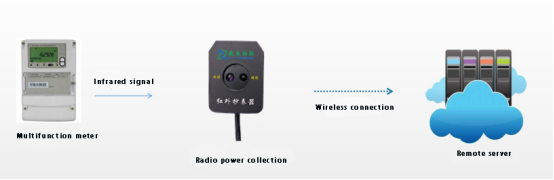
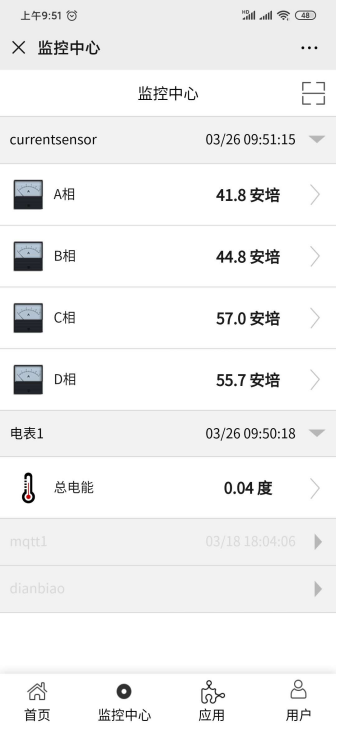
Data collection of the 10kV metering cabinet and electricity meters in the industrial park
In this case, the power meter data of 10kV metering cabinet in the industrial park is collected by battery power supply, and the collection frequency is 2 hours each time, and the power meter data is sent to the remote server by GPRS to realize the energy consumption monitoring in the park.
FAQ – Infrared Optical Probe Communication Transceiver (IEC 62056 / IEC 1107)
(Engineering & Utility Procurement Version)
1. What is an Infrared Optical Probe Communication Transceiver used for in utility projects?
It is used for automatic and manual meter data acquisition in electricity metering systems. It reads data from smart meters via infrared optical ports and is widely used in AMR (Automatic Meter Reading), AMI systems, and utility billing infrastructure.
2. Which standards does this device comply with?
The device fully supports:
3. Is it compatible with existing installed meters?
Yes. It is designed for retrofit deployment, meaning it can be used with existing IEC-compliant smart meters without replacing or modifying them.
4. How does the infrared optical communication work?
The device uses a non-contact infrared optical head that communicates directly with the meter’s optical port. Data exchange is performed via light signals, ensuring electrical isolation and high safety in field environments.
5. What are the typical output interfaces for system integration?
Depending on model configuration, outputs may include:
This allows integration with SCADA, AMR/AMI head-end systems, and energy management platforms.
6. Can this device be integrated into SCADA or utility management systems?
Yes. It is commonly integrated into:
SCADA systems
Energy Management Systems (EMS)
Meter Data Management Systems (MDMS)
Utility billing platforms
IoT cloud monitoring systems
7. What types of meters are supported?
The device supports:
IEC 62056 compliant smart electricity meters
IEC 1107 optical interface meters
Multi-function energy meters
Utility-grade revenue meters
Industrial power monitoring meters
8. What is the installation requirement?
Installation is simple:
Align optical probe with meter IR port
Magnetic or clamp fixation (depending on model)
Connect communication interface (RS485 / USB / etc.)
No rewiring or power shutdown is required.
9. Is this suitable for large-scale utility deployment?
Yes. It is designed for large-scale AMR/AMI deployment projects, supporting centralized data collection from multiple meters in utility networks and industrial facilities.
10. What is the communication distance of the optical probe?
The infrared communication distance is typically:
11. Can it operate in outdoor or harsh environments?
Yes. Industrial versions support:
Wide temperature operation (-20°C to +60°C)
Dust and moisture protection (IP54/IP65 optional enclosure)
Anti-interference optical design for field conditions
12. Does it support automatic and scheduled reading?
Yes. The device supports:
13. What is the main advantage compared to handheld meter reading tools?
Compared to handheld devices, this solution provides:
Fixed installation for continuous monitoring
Higher stability and automation
Integration with SCADA/MDMS systems
Reduced labor cost for utility operations
Scalable deployment for large networks
14. What industries typically use this device?
Power utilities and grid companies
Electricity distribution companies
Smart grid infrastructure projects
Industrial energy management systems
Commercial building energy monitoring
Smart city utility systems
15. Does it support remote data collection?
Yes. When integrated with RS485 gateways, IoT modules, or AMI systems, meter data can be transmitted remotely to central servers or cloud platforms.
16. What are the key advantages for engineering procurement teams?
Fully IEC 62056 / IEC 1107 compliant
Easy integration into existing utility systems
High reliability for long-term deployment
Low maintenance requirements
Scalable for large infrastructure projects
Compatible with global smart meter brands
 ch
 English