1 Product Overview
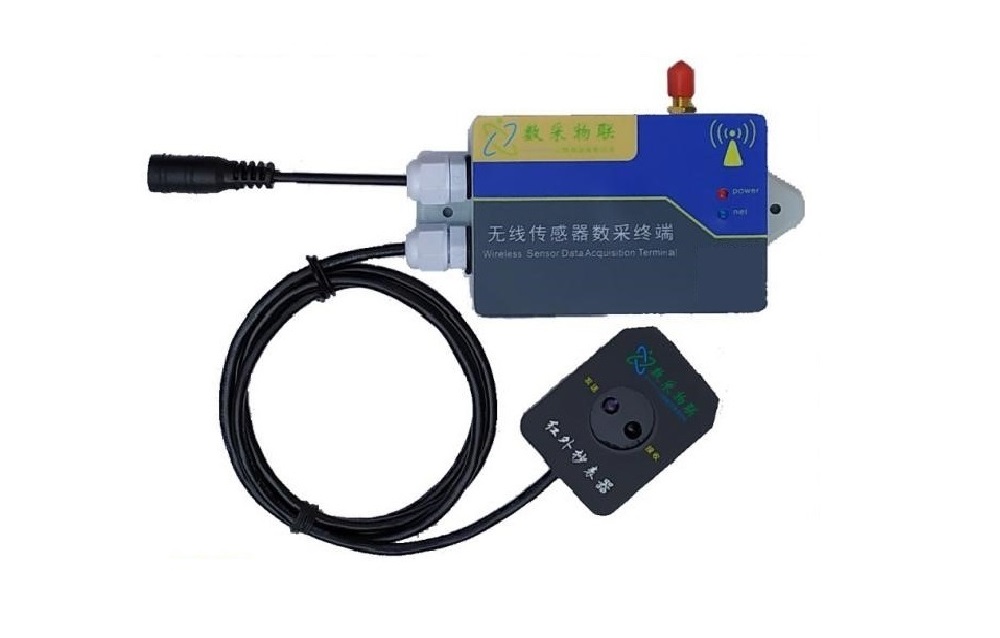
SC-GP-IR4G wireless infrared meter reading terminal is a general electrical meter and gas meter reading terminal based on infrared communication, 4G wireless transmission, DC wide voltage power supply, launched by Shanghai Data Acquisition IOT Technology Co., LTD., which can collect electric energy data, voltage, current, power factor and other electrical parameter data of State grid meters.
Introduction to the principle of infrared meter reading: infrared photoelectric probe through the infrared port to read the parameter information of smart meters and upload. The infrared meter reader has the function of infrared signal modulation and demodulation, modulates the binary digital signal into 38KHz frequency pulse sequence, and drives the infrared emitting diode to send out in the form of infrared light pulse. The transceiver converts the received optical pulse into an electrical signal, and then sends it to the demodulation circuit for demodulation after amplification and filtering. After the message is parsed, it is sent to the server in a specified format (such as Json).
Wireless infrared meter reading terminal supports 4G/LoRa communication mode, which greatly simplifies field deployment time and reduces construction costs. This product supports various meter reading scenarios with infrared communication interface, such as electric meters, gas meters, flow meters and other meters. This product is suitable for energy meter data collection, smart city data collection, power monitoring data collection, energy conservation and emission reduction data monitoring system data collection, energy consumption monitoring system data collection, photovoltaic system data collection, intelligent monitoring data collection, robot data collection, intelligent security system data collection, cloud platform system data collection and energy meter verification test bench. This product is especially suitable for the power supply bureau of the state grid meter master meter seal is completely closed, and cannot be open any seal of the situation of meter reading.
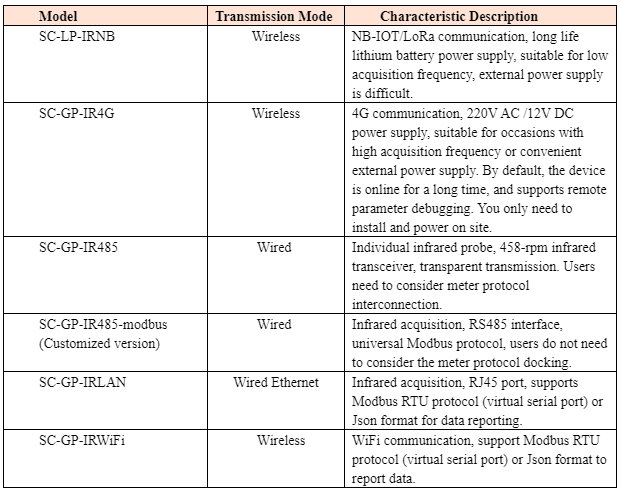
2 Order Specifications and Selection
3 Service Concept
We solemnly promise that:
What you buy is not only the product, but also the meticulous and thoughtful technical support services!!!( =^_^= )
This product, the site only ordinary workers connected to electricity installation! No debugging!
We provide free remote guidance, remote configuration and debugging service, and send the data to the user-specified cloud platform.
Free Internet of Things solution consulting services!
4 Implementing Standards
“Q/GDW 1365-2013 Smart Energy Meter Information Exchange Security Certification Technical Specification” National grid standard
“Multifunctional Energy Meter Communication Protocol DLT645-2007” National standard
“Type Specification for three-phase smart energy meters Q/GDW1356-2013” National grid standard
5 Product Features
5.1 Acquisition Characteristics
l Infrared Carrier Frequency: 38 kHz
l Communication Baud Rate: 1200~115200 bps, self-adapting according to the communication parameters of the energy meter
l Infrared Communication Distance: ≤10 meters
l Communication Angle: ≤15 degrees
l Infrared Communication Protocol: In accordance with IEC62056-21(IEC1107) and DL/T-645 1997 and 2007 standards, support Modbus protocol.
5.2 Electrical Character
l Power Supply Mode:12V DC power supply (Power interface: DC5.5*2.1mm female socket, positive inside and negative outside)
l Power Consumption: less than 5W
5.3 Communication Characteristics
Wireless Transmission Mode:LoRa/WiFi
Communication Protocol: MQTT / TCP / UDP / HTTP / SSL / ModBus RTU, and other protocols can be customized
Data Forwarding: any public network server
Number of Server Centers: up to simultaneous data reporting to 7 cloud servers.
Heartbeat Packet: support custom heartbeat packet, can be set to signal intensity.
Registration Package: support custom registration package, can be set to IMEI code.
Positioning: Support LBS base station positioning to facilitate the query of device location.
5.4 Structural Property
Antenna Type: sucker or glue stick external antenna (optional built-in antenna)
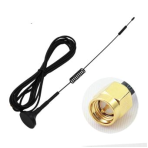
Sucker antenna | 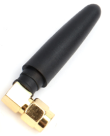 Glue stick antenna |
l Material: PC plastic (enclosure)
l Main Protection Level: IP65
l Main Mounting Method:paste installation
5.5 Working Environment
l Temperature: -30°C~75°C,Humidity: 0~95%
6 Product Core Advantages
v Simple installation, fast deployment, help the Internet of things project quickly landing.
v Support custom registration package and heartbeat package, facilitate the platform to distinguish devices.
v Support any Internet of Things cloud platform and configuration software, and provide data protocol docking.
v Support Ali cloud, Baidu Tiangong, OneNet, Tencent Cloud and other mainstream cloud platforms.
v Supports external multiple sensors
v Non-invasive measurement, which does not affect the normal operation of the equipment.
v Support remote configuration parameters and FOTA remote upgrade to minimize the personnel cost of site construction and maintenance.
7 Data Reporting Communication Protocol
7.1 Protocol Parsing Instructions
For UDP / TCP / MQTT / HTTP and other push methods, users should provide the public network IP (or domain name) address and port number of the cloud server to receive the data.
Example of JSON format:
{"Energy":3456.71,"ID":"868956048640233"}
Message analysis:
{
"Energy": 3456.71, // Total electrical energy, unit: degrees
"ID": "860344048491162" // Device ID
}
Multi-parameter acquisition version data format:
{
"Fflat": 0, // Forward flat charge
"Fpeak": 28.91, // Forward peak charge
"Fsharp": 105.6, // Forward spike charge
"Ftotal": 105.15, // Forward total charge
"Fvalley": 23.29, // Forward valley charge
"ID": "865650045071202", // ID of wireless infrared meter reader
"Rflat": 0, // Inverse flat energy
"Rpeak": 0, // Reverse peak charge
"Rsharp": 0, // Reverse spike charge
"Rtotal": 0, // Reverse total charge
"Rvalley": 0, // Reverse valley level power
"actPower": 13.715, // Total active power
"actPowerA": 4.524, //A Phase active power
"actPowerB": 0, //B Phase active power
"actPowerC": 9.191, //C Phase active power
"currentA": 40, //A Phase current
"currentB": 70, //B Phase current
"currentC": 50, //C Phase current
"fac": 0.414, // Total power factor
"facA": 0.707, // A Phase power factor
"facB": 0, //B Phase power factor
"facC": 0.707, //C Phase power factor
"lastMRtotal": 0, // Total amount of electricity reversed last month
"lastMtotal": 0, // Last month positive total electricity
"reactPower": 13.715, // Total reactive power
"reactPowerA": 4.524, //A Phase reactive power
"reactPowerB": 0, //B Phase reactive power
"reactPowerC": 9.191, //C Phase reactive power
"volA": 210, //A Phase voltage
"volB": 221, //B Phase voltage
"volC": 217 //C Phase voltage
}
7.2 Protocol Receiving Test
The network debugging assistant NetAssist can be used for reception testing.
7.3 Agreement Customization
If you need to customize other communication protocols, you can contact the business personnel to communicate them.
8 Platform Docking
8.1 Default Platform
The product is connected to our designated industrial Internet of Things platform by default, and the platform interface is as follows:
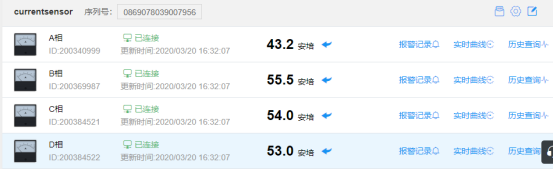
Computer-side browser interface
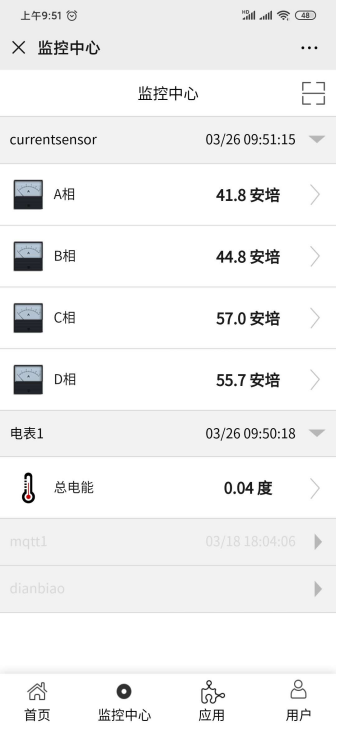
Mobile terminal WeChat access interface
8.2 The User Specifies the Platform
Take the connection of Ali Cloud platform as an example. After users create products and add devices on the Ali Cloud Internet of Things platform, users need to provide a triad: {ProductKey, DeviceName, DeviceSecret} and the MQTT theme to be released.
For example, the value of triples is:
ProductKey = b0FMK1Ga5cp
DeviceName = 862991419835241
DeviceSecret = y7MTCG6Gk33Ux26bbWSpANl4OaI0bg5Q
Taking the OneNet platform as an example, after a user creates a product or adds a device on the OneNet platform, the user needs to provide the product ID and device registration code.
For example:
ID:332590
Registration code:DGRUa7Vr9KYGunwJ
9 Application Cases
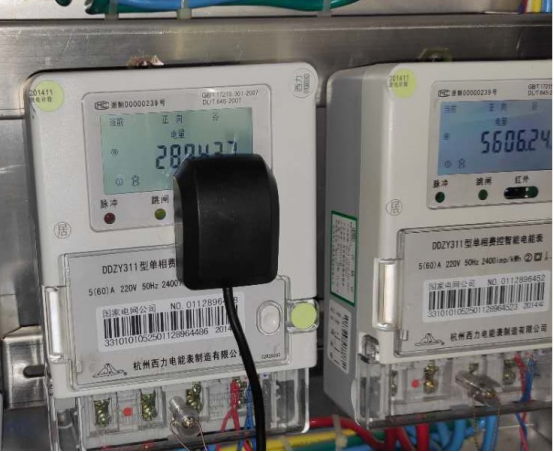
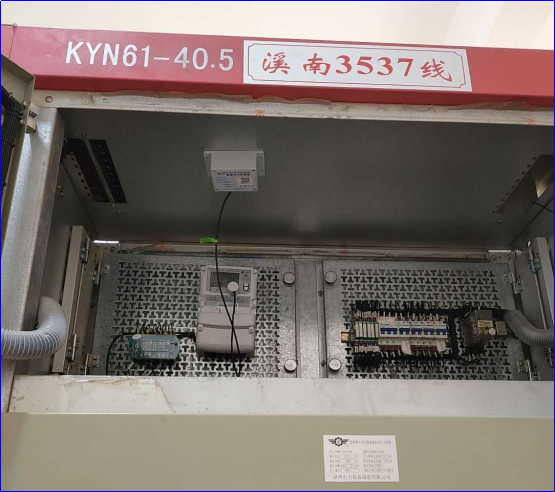
External power supply mode
10 Installation Precautions
1)Please refer to the link for installation tutorial: https://jingyan.baidu.com/article/a65957f4bf778565e77f9b47.html
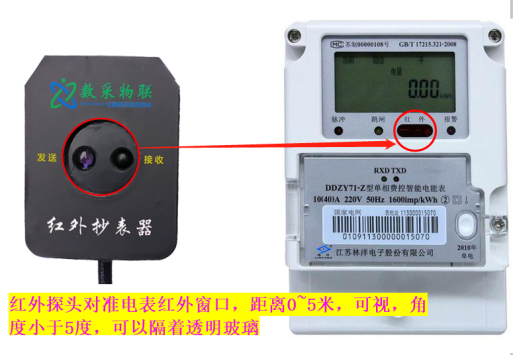
2)The infrared transmitting and receiving hole can be aligned with the infrared equipment that needs to be collected and communicated. During the communication process, please ensure that the communication distance and tilt Angle are within the technical requirements, otherwise the communication effect will be seriously affected.
3)This product has a built-in SIM card, and the annual data fee is about 10~20 yuan according to the reported data frequency. You can also use your own SIM card, which needs to be confirmed in advance.
FAQ – RS485 / WiFi / Modbus / LoRa Wireless Infrared Meter Reading Sensor
1. What is a Wireless Infrared Meter Reading Sensor?
A Wireless Infrared Meter Reading Sensor is an Industrial IoT device that automatically reads data from utility meters through their infrared optical communication ports and transmits the data via RS485, Modbus RTU, WiFi, or LoRa networks for remote monitoring and management.
2. What types of meters are supported?
The device is compatible with various utility and industrial meters, including:
3. Which communication standards are supported?
The sensor supports:
IEC62056-21 (IEC1107)
DL/T645-1997
DL/T645-2007
Modbus RTU
MQTT (Optional)
HTTP/HTTPS (Optional)
Custom protocol development is available for large projects.
4. Does the device require modification of existing meters?
No.
The infrared reading sensor is designed as a retrofit solution and can be attached directly to the meter's optical port without modifying the meter itself.
5. How is the infrared sensor installed?
Installation is simple:
Align the infrared probe with the meter optical port
Fix it using magnetic mounting, adhesive, or brackets
Configure communication settings
Start automatic meter reading
No meter shutdown is required.
6. Can it be used for Automatic Meter Reading (AMR) projects?
Yes.
The device is specifically designed for:
AMR (Automatic Meter Reading)
AMI (Advanced Metering Infrastructure)
Smart Utility Monitoring
Energy Management Systems
7. What communication methods are available?
The device supports:
Wired Communication
Wireless Communication
Optional versions may support:
8. What is the transmission distance?
LoRa Version
RS485 Version
WiFi Version
9. Is battery-powered operation available?
Yes.
The sensor supports:
for remote deployments where utility power is unavailable.
10. How long can the battery last?
Depending on the reporting interval:
1-hour reporting: up to 5 years
15-minute reporting: typically 2–3 years
More frequent uploads will reduce battery life
11. Can data be uploaded to cloud platforms?
Yes.
The sensor can transmit data to:
via gateways or direct wireless communication.
12. Does it support real-time monitoring?
Yes.
Users can monitor:
Meter readings
Consumption trends
Device status
Communication status
Alarm events
through web dashboards and mobile applications.
13. What alarms are supported?
Configurable alarms include:
Communication Failure Alarm
Device Offline Alarm
Low Battery Alarm
Abnormal Consumption Alarm
Meter Reading Exception Alarm
14. Is the device suitable for outdoor installation?
Yes.
Industrial versions support:
making them suitable for utility field installations.
15. Can multiple meters be managed from one platform?
Yes.
A single cloud platform can manage:
Hundreds of meters
Thousands of meters
Multiple utility sites
Distributed AMR projects
from one centralized dashboard.
16. Can the sensor work with legacy meters?
Yes.
It is ideal for upgrading:
Existing utility meters
Old-generation smart meters
Non-networked energy meters
Legacy metering infrastructure
without replacing installed equipment.
17. What industries commonly use this device?
Utility Companies
Commercial Buildings
Shopping malls
Office buildings
Campuses
Industrial Facilities
Factories
Industrial parks
Manufacturing plants
Smart City Projects
18. What are the main benefits of using this infrared meter reading sensor?
Reduce Manual Meter Reading Costs
Eliminates frequent on-site meter reading visits.
Improve Data Accuracy
Automatically collects meter data without human errors.
Enable Remote Monitoring
Provides real-time visibility into utility consumption.
Extend Meter Service Life
No need to replace functioning meters.
Accelerate Smart Metering Projects
A cost-effective solution for AMR and AMI deployments.
19. Why choose this solution over meter replacement?
Replacing thousands of existing meters can be expensive and time-consuming.
This infrared meter reading sensor allows utilities and facility operators to:
Preserve existing infrastructure
Reduce project costs
Minimize installation time
Achieve digital transformation faster
Enable Industrial IoT integration without large capital investments
 ch
 English