Industrial IoT Timelapse Camera with WiFi & FTP Upload | Remote Monitoring Gauge Reading Camera
⚡ Industrial IoT Timelapse Camera – Key Advantages
1. Remote Gauge & Equipment Monitoring
2. WiFi & FTP Upload Support
3. High-Precision Timelapse Photography
4. Waterproof & Industrial-Grade Design
5. IR Fill Light for Low-Light Conditions
6. Easy Installation & Maintenance-Free Operation
Product Details
1 Productoverview
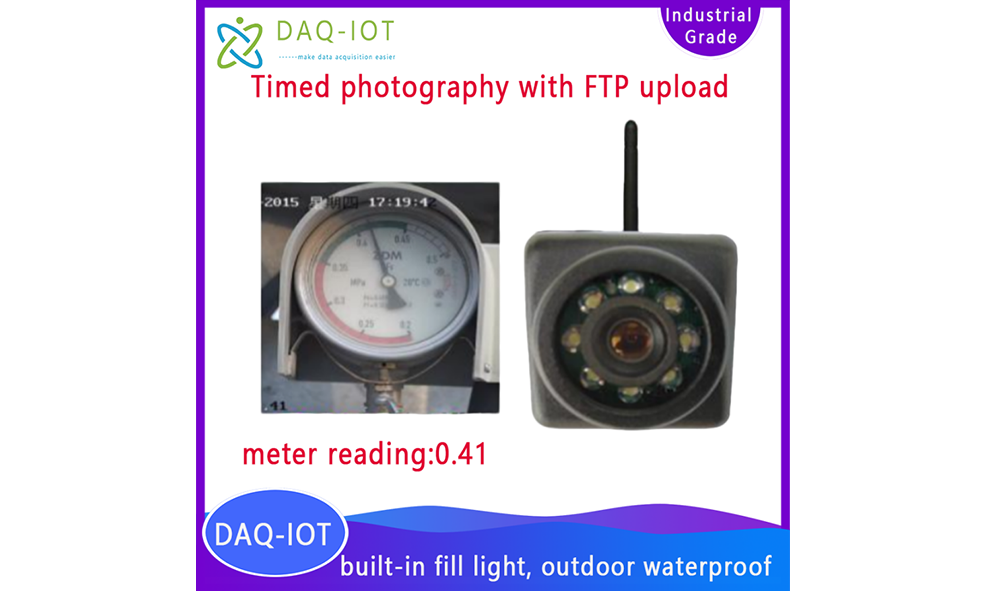
SC-GP-CAM is a camera launched by Shanghai Shucai Internet of Things Technology Co., LTD., which is based on wifi and can take photos at regular intervals, capture videos, upload photos to FTP. It can be widely used in the capture and recognition of instrument readings, photo capture and video surveillance in cultural relics, geotechnical engineering, hydrology and water conservancy fields.
This product supports wifi/ Ethernet access to the network, and can take photos at regular intervals and upload them to the specified FTP server or store them in the SD card. With wireless network card, it can be used in outdoor scenes without wifi network.
2 service idea
Our company Zhengzhou promises:
You are not only buying a product, but also meticulous and thoughtful technical support services.
We provide remote guidance, remote configuration and debugging services for free, and send data to the server specified by the customer.
Free consulting service on Internet of Things solutions!
3 Product characteristic parameters
3.1 Camera parameters and selection
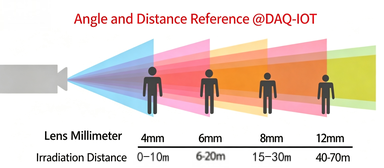
Pixels: 2,000,000,3,000,000,5,000,000 are optional, default is 2,000,000
Lens: 2.8mm/4mm/6mm
Lens specification
2.8mm
4mm
6mm
The monitoring Angle
90 degrees
80 degrees
70 degrees
Keep your distance
0~5m
0~10m
6~20m
Memory card function: support
Power supply: 12V DC
Weight: 0.35kg
3.2 electrical character
Power supply: 12V DC or battery power
(Power interface: DC5.5*2.1mm Mother socket, positive inside and negative outside)
uSimple installation and rapid deployment help the Internet of Things project to be implemented quickly
uSmall size
uRainproof design, suitable for outdoor environment
uBuilt-in flash, suitable for night photography
uSupports remote configuration parameters
5 WiFi camera configuration
5.1 Connect to the computer
Plug the camera in and connect it to your computer with a network cable.
Check the IP address on the camera label. The default is 192.168.1.88 (actual IP address is subject to the camera label).
Set the computer IP to be in the same subnet as the camera, enter the camera IP in the browser, and press Enter to enter the login interface
The default user name and password are both admin (the actual one is on the camera label).
6 Custom development of dashboard recognition software
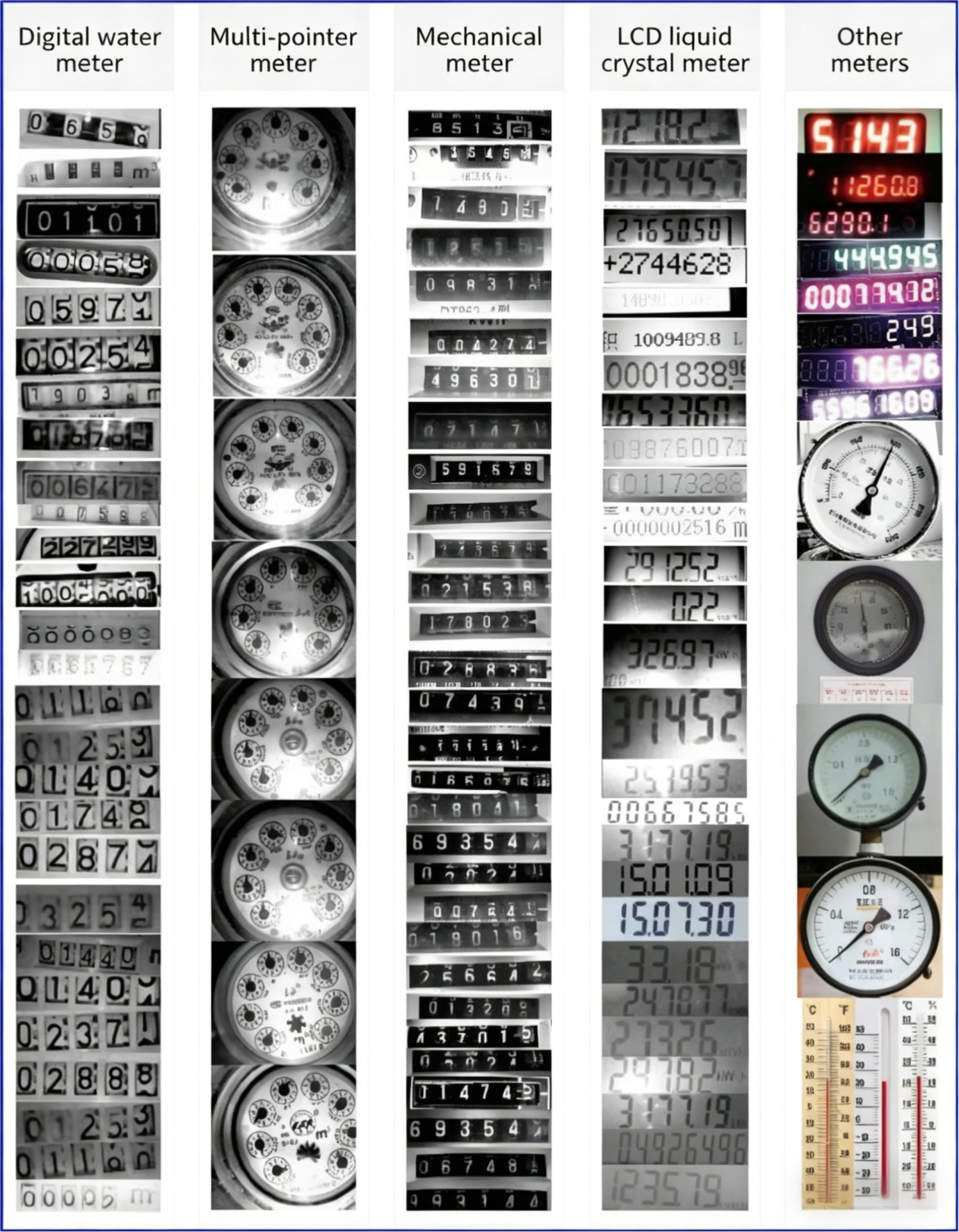
6.1 Introduction to pointer instrument recognition/OCR algorithm
For the collected images, Gaussian Filtering is typically used to reduce noise. For the pre-processed images, the Canny Edge Detection method is employed for edge detection, which precisely filters out non-critical elements to identify the contours of instruments and panels. The Hough Transform is used to detect instrument scales and pointers, as well as to measure liquid levels. For image classification tasks, such as digital recognition, instrument style recognition, and text location detection in natural scenes, deep learning methods are utilized. The model employs a deep convolutional neural network (CNN) to construct different network models based on the features of the images.
Pointer instrument recognition is mainly for pointer instruments, which is automatic identification of industrial instruments through video images.
The process of identification involves using specific methods to effectively screen the area and locate the instrument's pointer. By calculating the angle between the line from the center of the dial to the pointer's rotation center and the 0-degree mark on the sub-dial, the algorithm can determine the angle between the sub-dial's 0-degree mark and the pointer's pointing line segment, thus further identifying and interpreting the pointer reading. Experimental results show that this positioning and recognition algorithm is simple to calculate, has a high accuracy rate, and overcomes the impact of random angle tilts on the dial on the reading recognition algorithm.
❓ Industrial IoT Timelapse Camera – FAQ
1. What is an industrial timelapse monitoring camera used for?
It is used for remote monitoring of industrial equipment, gauges, and meters by automatically capturing images at set intervals for analysis and documentation.
2. Does the camera support remote access?
Yes. The camera supports remote monitoring via WiFi and allows users to view or manage captured data from a central system or remote platform.
3. How is data transferred from the camera?
It supportsFTP upload, enabling automatic transmission of images and data to cloud servers or local FTP storage systems.
4. Can it work in outdoor or harsh environments?
Yes. The camera features awaterproof industrial-grade design (IP-rated enclosure)suitable for outdoor, factory, and harsh environmental conditions.
5. Does it support night or low-light monitoring?
Yes. It is equipped withinfrared (IR) fill light, allowing clear image capture even in dark or low-visibility environments.
6. What types of applications is it suitable for?
It is widely used inindustrial equipment monitoring, power stations, construction sites, utility meter reading, and remote inspection systems.
7. Is installation complicated?
No. The camera is designed foreasy installation and plug-and-play deployment, reducing setup time and maintenance effort.
8. Can it run continuously for long-term monitoring?
Yes. It is designed forstable long-term timelapse operation, supporting continuous industrial monitoring without frequent maintenance.
🚀 Call To Action (CTA)
Upgrade your industrial monitoring system with smart IoT timelapse technology.
👉Request Product Datasheet 👉Get Technical Support for Integration 👉Ask for OEM / Custom Configuration 👉Request a Project Quotation
📩 Contact us today to build your remote industrial monitoring solution with WiFi & FTP-enabled timelapse imaging.
 ch
 English