1. Product Overview
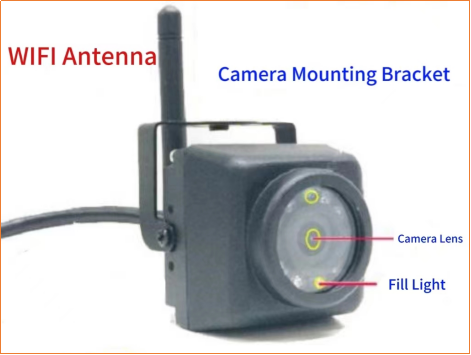
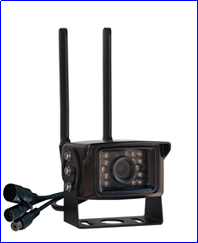
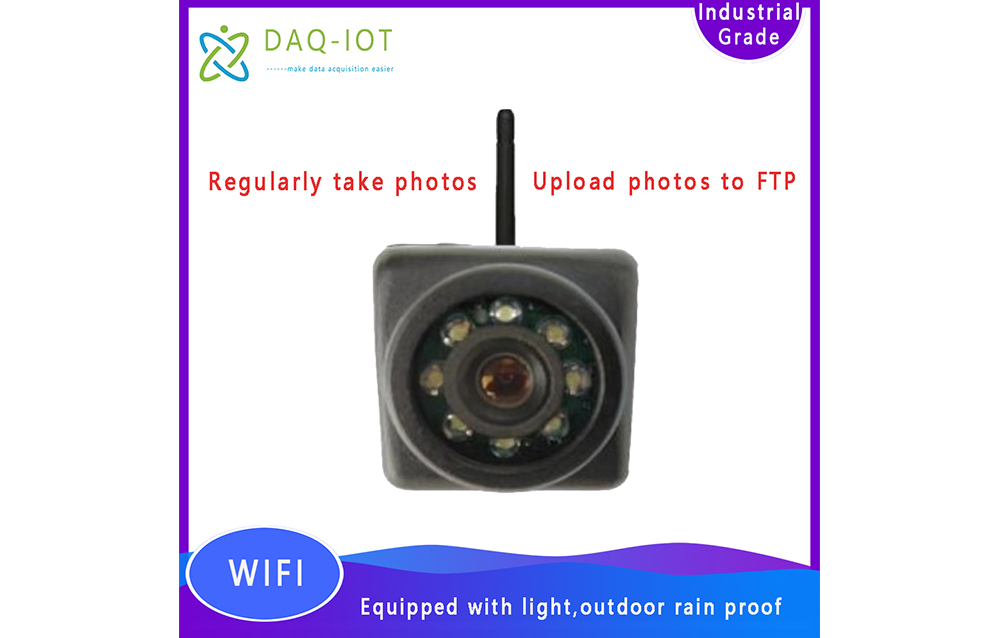
4G version time-lapse camera
DAQ-GP-CAM is a wireless time-lapse camera based on 4G or WiFi, which can take pictures at certain intervals and upload to FTP server, launched by Shanghai Data Acquisition IOT Technology Co., Ltd. It can be widely used to capture the data of instruments, and can also be used for photo capture and video surveillance in the fields of cultural relics, rock and soil, hydrology and water conservancy.
This product supports WiFi/4G Ethernet access to the network, take photos regularly and upload the photos to the designated FTP server or store them in an SD card. With 4G wireless network card, it can be used in scenarios where there is no WiFi network outdoors.
2 Service Concept
Our company solemnly promise you:
You buy more than just products, but also meticulous and thoughtful technical support.
We provide free remote guidance, remote configuration and commissioning services, and send data to the server specified by the customer.
Free IOT solution consulting services!
3 Product Characteristic Parameters
3.1 Camera Parameters and Selection
Pixels: 2 million, 3 million, 5 million optional, default 2 million
Lens: 2.8mm/4mm/6mm
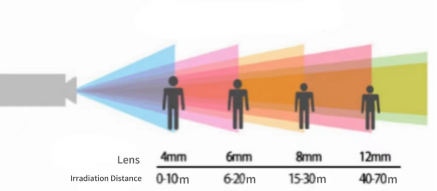
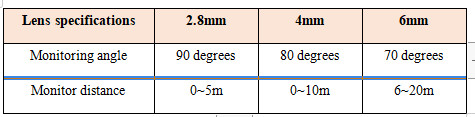
SD card:Yes
Power supply: 12V DC
Weight: 0.35kg
3.2 Electrical Characteristics
Power supply mode: 12V DC or battery power
(Power interface: DC5.5*2.1mm female socket, internal positive and negative outside).
3.3 Communication Characteristics
Default networking mode: Ethernet/WiFi, 4G
Image upload: FTP server
3.4 Structural Characteristics
Antenna type: glue stick type external antenna
Material: PC plastic (shell)
Main body protection level: IP65
Size: 50mm×50mm×30mm
3.5 Working Environment
Ambient temperature -30°C~70°C, humidity 0~95% (non-condensing)
4 Component Matching
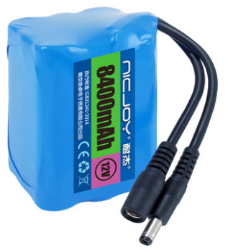
Equipped with 12V lithium battery pack | 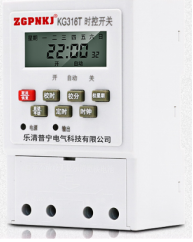
Time control switch (cut off the power when idle, save power) |
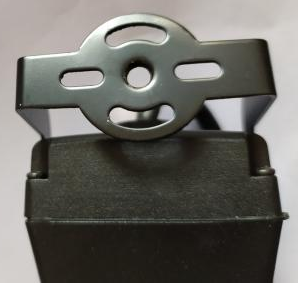
Camera bottom mounting bracket
5 The Core Advantages of the Product
u Simple installation and rapid deployment, helping IoT projects to land quickly
u Small size
u Rainproof, suitable for outdoor environments
u Comes with fill light, suitable for taking photos at night
u Remote configuration of parameters
6 WiFi Camera Configuration
6.1 Connect to Computer
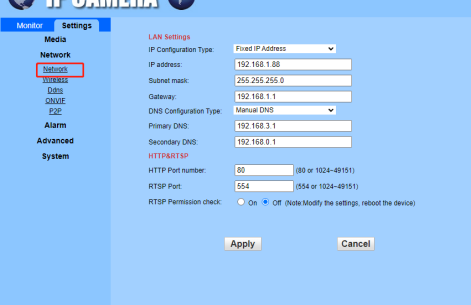
Power on the camera and connect it to the computer with a network cable.
Check the IP address on the camera label, the default is 192.168.1.88 (the actual value on the camera label shall prevail).
Set the computer IP to the same network segment as the camera, enter the camera IP in the browser, and enter the login interface
By default, the username and password are admin (actually subject to the camera label).
6.2 WiFi Settings
7 Timed Photo Upload Settings
Capture photos can be stored to SD card or uploaded to FTP server at any time and interval.
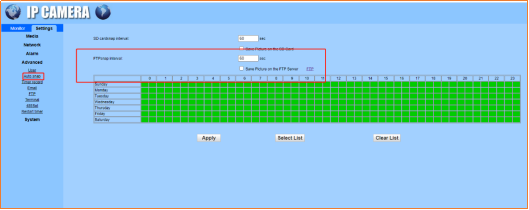
Time-lapse interval setting
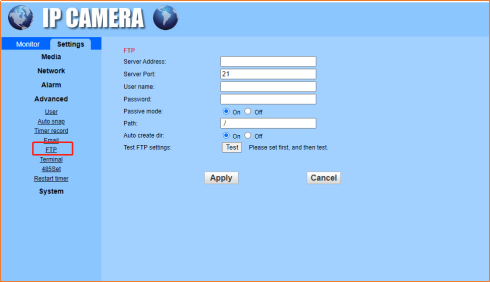
FTP parameter settings
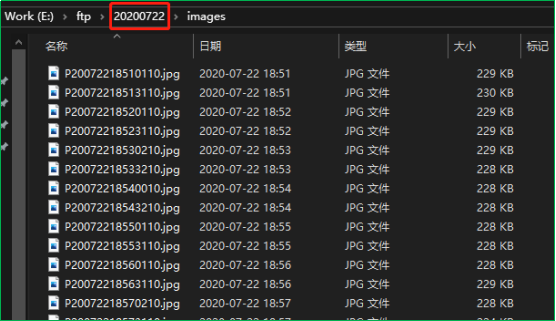
Example image upload result
8 Custom Development of Dashboard Recognition Software
8.1 Introduction to Pointer Meter Recognition/OCR Algorithms
Gaussian Filtering is generally used for image noise reduction. Canny Edge Detection method is generally used for edge detection of preprocessed images. Find the profile of the meter and panel by accurately filtering various non-critical targets. The instrument scale and instrument pointer can be detected by Hough transform, and the liquid level can also be detected by Hough transform. For the targets that need to do image classification, deep learning methods are adopted, such as number recognition, instrument style recognition and text position detection in natural scenes. The model adopts the convolutional neural network (CNN) model of deep learning, and builds different network models according to the features of the images.
Pointer type instrument recognition is mainly for pointer type instrument, which is a function of automatic recognition of industrial instrument recognition through video images.
The identification process is: using some special methods to complete the effective area screening and the pointer positioning of the instrument, according to the dial center to the dial center of the line and the Angle of the sub-dial 0 scale line, calculate the Angle between the sub-dial 0 scale line and the pointer pointing line segment, and further identify and interpret the pointer reading. The experimental results show that the algorithm is simple and accurate, and overcomes the influence of the dial's random Angle tilt on the reading recognition algorithm.
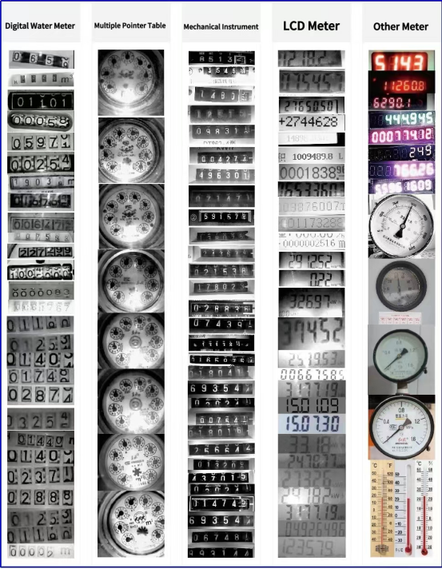
Supported meter types for recognition
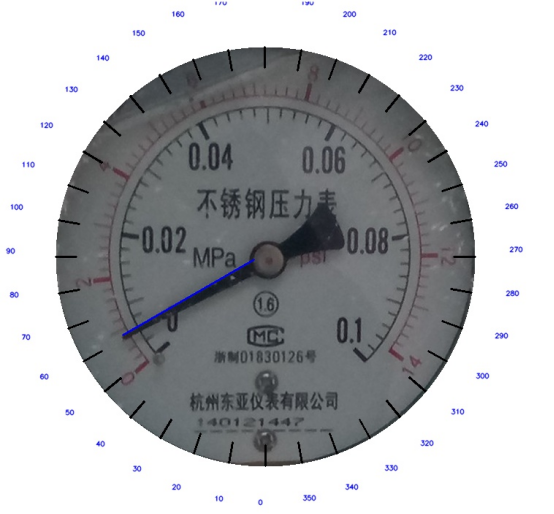
(This image is based on open CV)
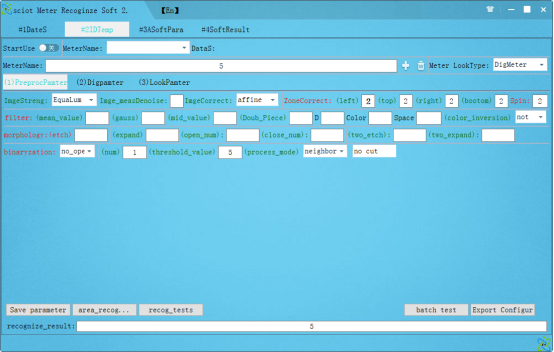
(The software is based on open CV)
9 Application Cases
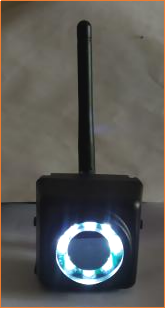
Night fill light effect
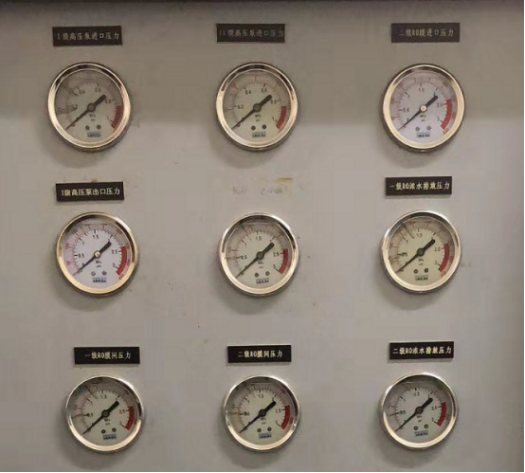
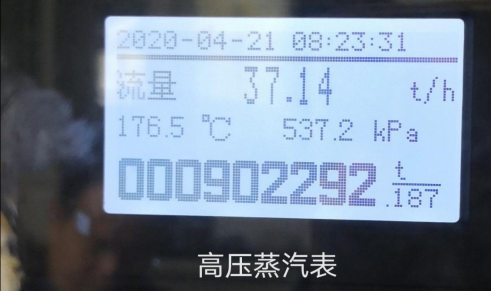
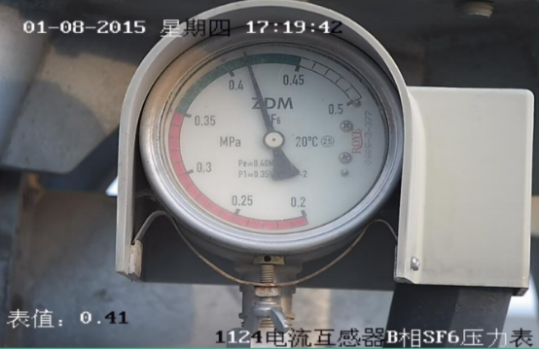
Industrial instrument photo recognition
FAQ – WiFi Wireless Time-Lapse Camera Meter Reader
1. What is a WiFi time-lapse camera meter reader?
It is an image-based smart meter reading device that automatically captures periodic photos of utility meters or industrial instruments and uploads them via WiFi for remote monitoring and data extraction (OCR).
2. What types of meters can it read?
The device can be used for:
3. Does it require replacing existing meters?
No. It is a retrofit solution that works with existing mechanical and digital meters without modification or replacement.
4. How does the system read meter data?
The system works in two steps:
The camera captures scheduled images of the meter display
Images are uploaded to a cloud platform where OCR software extracts the data automatically
5. What is the image capture interval?
The capture interval is configurable:
6. Does it support real-time monitoring?
Yes. While it is time-lapse based, images can be captured frequently (e.g., every minute) to achieve near real-time monitoring when needed.
7. What communication method does it use?
The device uses:
8. What happens if the WiFi connection is lost?
If the network is unavailable:
9. Does it support OCR automatic meter reading?
Yes. It supports integration with AI OCR systems for:
Numeric recognition
Pointer gauge interpretation
Mechanical counter reading
Digital display extraction
10. What is the installation method?
Installation is simple:
Wall mounting / bracket mounting / magnetic installation
Camera aligned with meter display
Power on and configure WiFi
No wiring modification is required for meters.
11. Is the device suitable for outdoor environments?
Yes. Industrial models support:
IP65 / IP67 protection (optional)
UV-resistant housing
Dust and water resistance
Stable operation in harsh environments
12. What power options are available?
Depending on the model:
DC 5V / 12V external power
Battery-powered (long-life lithium battery)
Optional solar power system for remote locations
13. How long does the battery last?
Battery life depends on capture frequency:
14. Can it work in remote areas without electricity?
Yes. With battery or solar-powered versions, it is suitable for:
15. Is cloud platform integration supported?
Yes. The system supports:
16. What are the advantages compared to traditional meter reading?
No manual on-site reading required
No meter replacement needed
Works with legacy mechanical meters
Reduces labor and operational costs
Enables remote digital monitoring
Easy retrofit deployment
17. What industries commonly use this system?
Utilities
Industrial Applications
Smart Infrastructure
18. Can it be used for industrial instruments, not just meters?
Yes. It supports monitoring of:
Pressure gauges
Flow meters
Level indicators
Analog dial instruments
Mechanical counters
19. What are the key advantages of this system?
Retrofit design (no meter replacement)
WiFi-based remote monitoring
OCR-ready image acquisition
Flexible time-lapse scheduling
Battery/solar power options
Suitable for harsh industrial environments
 ch
 English