1 Product Introduction
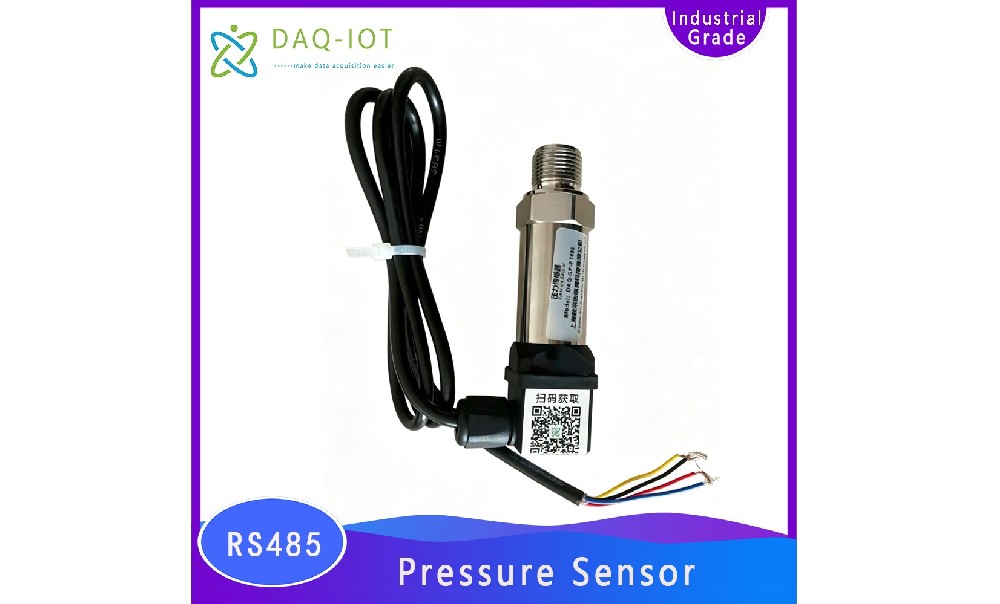
The DAQ-GP-PS485 Pressure Sensor is a high-performance pressure transmitter developed by Shanghai DAQ-IOT Technology Co., Ltd. It utilizes a high-precision piezoresistive sensing element as the core measurement component. Each sensor undergoes automated computer-based testing and is precisely calibrated using advanced laser trimming technology to achieve zero-point and sensitivity temperature compensation over a wide temperature range.
The integrated signal conditioning and amplification circuit converts the sensor output into a standard output signal, fully leveraging the advantages of the sensing element. As a result, the pressure/level transmitter delivers outstanding performance and reliability in demanding industrial environments.
Featuring excellent resistance to electromagnetic interference, overload pressure, and mechanical shock, the DAQ-GP-PS485 also offers low temperature drift, high stability, and exceptional measurement accuracy. These characteristics make it an ideal pressure measurement instrument for industrial automation, process control, water treatment, energy management, hydraulic systems, and various Industrial IoT (IIoT) applications.
2 Working Principle
The pressure sensor utilizes a Wheatstone bridge diffused onto a silicon diaphragm. When pressure from the measured medium is applied to the sensing element, the resistance values of the bridge arms change due to the piezoresistive effect, generating a differential voltage signal.
This differential signal is then processed and amplified by a dedicated signal conditioning circuit, which converts it into a standard analog or digital output signal proportional to the corresponding pressure range.
The resulting output can be directly transmitted to PLCs, SCADA systems, RTUs, data acquisition devices, and Industrial IoT platforms for real-time pressure monitoring and control.
3 Service Concept
Our company solemnly promises:
You buy not only the product, but also the meticulous and thoughtful technical support service ! ! ! ( =^_^= )
This product only needs ordinary workers to connect the power and install it on site! No debugging is required!
We provide free remote guidance, remote configuration and debugging services, and send data to the user's designated cloud platform.
As an expert in industrial data collection, Shucai IoT provides free IoT solution consulting services!
4 Technical Specifications
Parameter | Specification |
Measured Medium | Liquids or gases compatible with wetted materials |
Wetted Materials | Diaphragm: 316L Stainless Steel |
| Process Connection: 304 Stainless Steel |
| Seal: Nitrile Rubber (NBR) |
Housing Material | 304 Stainless Steel |
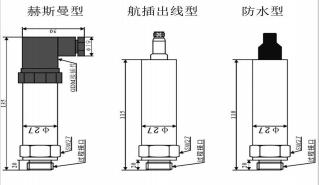
Electrical Connection | Hirschmann Connector (Standard), Waterproof Cable Gland (Direct Cable), Aviation Connector |
Pressure Range | -100 kPa to 4 kPa up to 100 MPa (Refer to Selection Guide) |
Pressure Reference | Gauge Pressure (GP), Absolute Pressure (AP), Vacuum Pressure |
Output Signal | 4–20 mA (Standard, Power Supply: 8–30 VDC) |
| 0–10 V (Power Supply: 12–30 VDC) |
| 0–5 V, 1–5 V, 1–10 V, 0.5–4.5 V (Customized) |
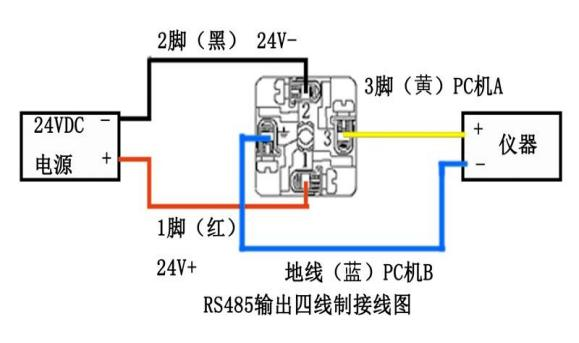
| RS485 (Standard Modbus RTU Protocol, Power Supply: 6–30 VDC) |
Accuracy | ±0.2% FS, ±0.5% FS (Available for ranges ≥ 4 kPa, customized) |
Medium Temperature | -20°C to +70°C |
Ambient Temperature | -20°C to +70°C |
Ambient Humidity | 0% to 95% RH (Non-condensing) |
Temperature Compensation Range | -10°C to +70°C |
Vibration Resistance | 10 g (20 to 2000 Hz) |
Overload Capacity | 200% of Full Scale (FS) |
Response Frequency | 10 Hz to 1200 Hz |
Long-Term Stability | ±0.1% FS/year |
Temperature Drift | ±0.01% FS/°C (Within Compensation Range) |
Protection Rating | IP65 / IP67 |
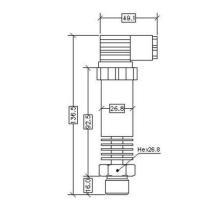
5 Product Dimensions
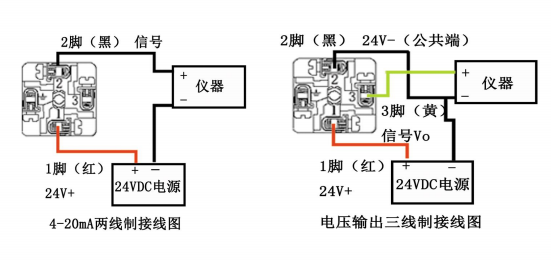
6 Wiring Connection
7 Precautions for Use
1. Installation must be carried out only when the system is depressurized and the power supply is disconnected.
2. Do not use the transmitter to measure media that are incompatible with the wetted materials of the sensor.
3. Do not modify, disassemble, or alter the device in any way.
4. As this product is a low-voltage electronic device, ensure that both the pressure source and power supply are disconnected before wiring or maintenance to prevent accidents caused by media leakage or ejection.
5. For pressure ranges below 0.03 MPa, vertical installation is recommended (except for models specifically designed for gas measurement) to ensure optimal measurement accuracy.
6. When measuring high-temperature steam or gas media, ensure that the medium temperature does not exceed the transmitter's specified operating temperature range. If necessary, install a cooling device or siphon tube to reduce the temperature at the sensing element.
7. During installation, use a wrench to tighten the transmitter at the hexagonal fitting located at the base of the process connection. Do not rotate the upper housing directly, as this may damage or disconnect the electrical wiring.
8. Verify that the power supply voltage complies with the transmitter's specified requirements and that the maximum pressure of the pressure source does not exceed the transmitter's rated pressure range.
9. The sensing element is a precision component. Users should not disassemble the sensor or touch the pressure diaphragm, as this may result in permanent damage and affect measurement performance.
Safety Notes
· Read the operating instructions carefully before installation and use.
· Follow all applicable electrical and safety regulations.
· Protect the transmitter from excessive vibration, mechanical shock, and corrosive environments.
· Regularly inspect wiring, seals, and process connections to ensure reliable operation.
· Improper installation or operation may affect measurement accuracy and product lifespan.
 ch
 English