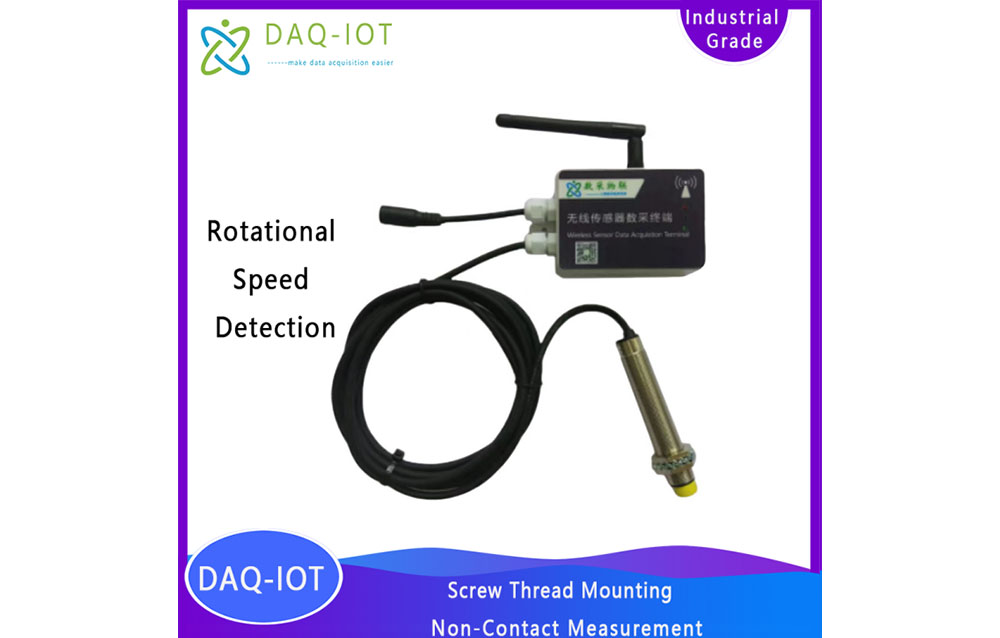
1 Product Overview
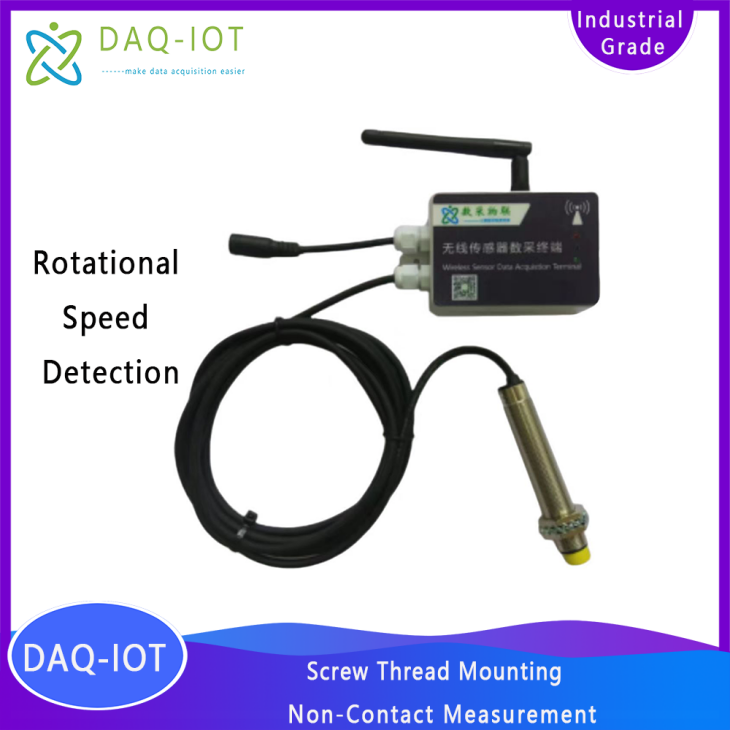
2
Model | Specification |
DAQ-GP-RPM4G | 4G transmission, powered by standard 12V DC supply, suitable for applications with convenient power access and high-frequency data acquisition requirements. |
DAQ-LP-RPM4G | 4G transmission with 3.6V battery power supply. Battery life varies from 1 to 2 years depending on the data acquisition frequency. It is suitable for applications where data collection frequency is low and power supply is difficult or unavailable. |
DAQ-GP-RPMLoRa | LoRa transmission, powered by 12V DC supply. |
…….. | Customized (communication methods such as RS485, WiFi, Ethernet interface, etc.). |
3
Wireless Rotation Speed Monitor (RPM Sensor) for Industrial Equipment | Real-Time IoT Predictive Maintenance Monitoring System
📌 Product Overview / Long Description
The Wireless Rotation Speed Monitor is an advanced industrial IoT sensor designed for real-time monitoring of equipment rotational speed (RPM) in critical machinery systems. It enables continuous, contactless or magnetic-based measurement of rotating assets, helping industries improve operational safety, reduce downtime, and implement predictive maintenance strategies.
This smart monitoring solution eliminates the need for manual inspection and wired installation in complex industrial environments. With wireless data transmission capabilities, it provides stable and accurate RPM data to cloud platforms, PLC systems, or SCADA monitoring centers.
Designed for harsh industrial environments, the system is widely used in motors, pumps, conveyors, turbines, compressors, and heavy machinery, especially where continuous monitoring is essential for preventing unexpected failures.
By integrating wireless communication and low-power design, this RPM monitoring system is ideal for both fixed and remote installations, including hard-to-reach or rotating equipment.
🌍 Key Advantages
Real-time wireless RPM monitoring
Supports predictive maintenance and early fault detection
Reduces manual inspection and maintenance cost
Easy installation without complex wiring
Industrial-grade reliability for harsh environments
Compatible with IoT and SCADA systems
📊 Product Specifications
Measurement & Performance
Measurement Range: 0 – 9999 RPM (customizable range available)
Accuracy: ±0.1% – ±1% depending on configuration
Sampling Rate: Real-time continuous monitoring
Detection Type: Magnetic / optical / vibration-based (optional)
Wireless Communication
4G LTE / NB-IoT / LoRa / WiFi (optional configurations)
Cloud platform / local gateway support
MQTT / Modbus / RS485 / API integration available
Power Supply
Industrial lithium battery (long-life operation)
Optional solar-powered version for remote sites
Ultra-low power consumption design
Environmental Conditions
Protection Rating: IP65 / IP66 / IP67 (optional)
Operating Temperature: -20°C ~ +70°C
Resistant to dust, vibration, humidity, and outdoor conditions
Installation
Non-contact or magnetic mounting
Easy retrofit installation on existing equipment
Suitable for rotating shafts and industrial machinery
🏭 Typical Applications
Industrial motor RPM monitoring
Pump and compressor systems
Conveyor belt speed monitoring
Wind turbines and energy systems
Mining and heavy machinery
Predictive maintenance systems
Industrial automation & smart factories
❓ Frequently Asked Questions (FAQ)
1. What is a wireless rotation speed monitor used for?
It is used to measure and monitor the rotational speed (RPM) of industrial equipment in real time, helping detect abnormal operation and prevent equipment failure.
2. What is the benefit of wireless RPM monitoring?
Wireless monitoring eliminates complex wiring, reduces installation cost, and allows remote access to real-time data, making it ideal for predictive maintenance systems.
3. How far can the wireless signal transmit?
Depending on the technology used, transmission can range from several hundred meters (LoRa) to global coverage via 4G/NB-IoT networks.
4. Can it be used in harsh environments?
Yes. The device is designed with industrial-grade protection (IP65–IP67), making it suitable for dust, vibration, humidity, and outdoor industrial environments.
5. Does it support cloud monitoring?
Yes. The system can upload data to cloud platforms for real-time visualization, historical data analysis, and alarm notifications.
6. Can it integrate with PLC or SCADA systems?
Yes. It supports Modbus, RS485, MQTT, and API interfaces for easy integration into industrial control systems.
7. How is it powered?
It can be powered by a built-in lithium battery, external DC supply, or optional solar power system for remote applications.
8. What industries commonly use it?
It is widely used in manufacturing, mining, energy systems, conveyors, pumps, turbines, and industrial automation environments.
🚀 Call To Action (CTA)
Improve your equipment reliability with real-time wireless RPM monitoring.
Contact us today for technical specifications, OEM customization, or project-based solutions.
👉 Get a Free Quote
👉 Request Technical Datasheet
👉 OEM / ODM Custom Solution Available
6 Typical Application Cases


7 Data Reporting Communication Protocol
7.1
Multiple push methods such as UDP/TCP/MQTT/HTTP are available. Users need to provide the public IP address and port number of the cloud server to receive data.
Example of JSON format data message:
{"IMEI":860344048491162,"RotateSpeed":254,"ICCID":"1119205006447538"}
Message parsing:
{
"RotateSpeed":2000 // Rotational speed r/min
"ID": "860344048491162" // Device ID
}
Protocol reception test
The network debugging assistant NetAssist can be used for reception testing.
7.2 Protocol customization
If other communication protocols need to be customized, please contact the business personnel for communication.
8 Platform docking
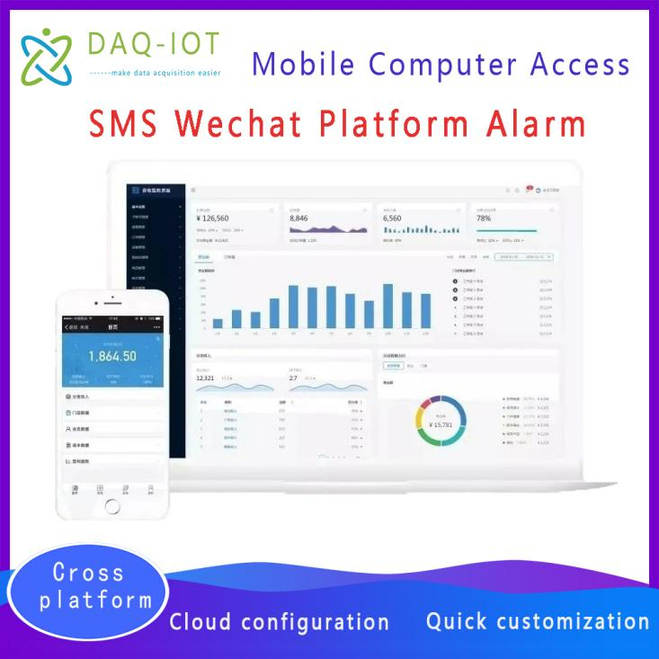
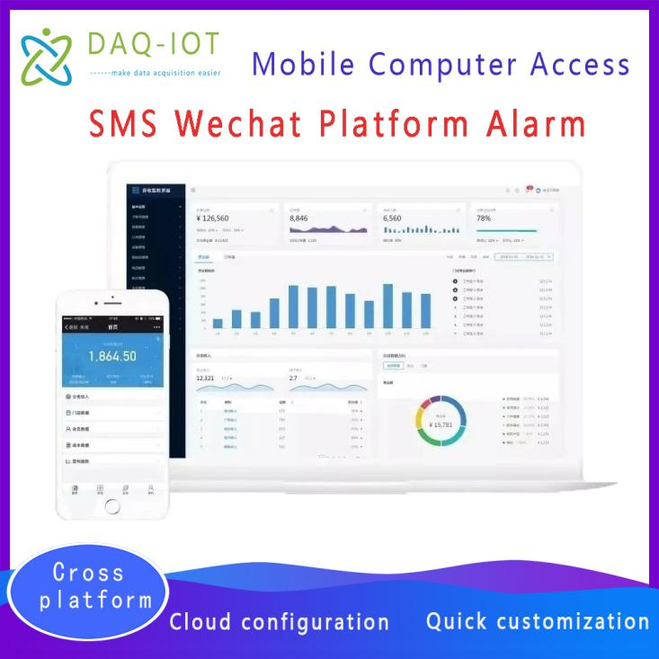
8.1 Default platform
The product is connected to our designated open industrial Internet of Things platform by default when leaving the factory. The platform interface is as follows:

电脑端浏览器界面

手机端微信访问界面
8.2
Taking the docking with Alibaba Cloud platform as an example, after a user creates a product and adds a device on the Alibaba Cloud IoT Platform, the user needs to provide a triplet: {ProductKey, DeviceName, DeviceSecret} and the MQTT topic to be published.
For example, the values of the triplet are respectively:
ProductKey = b0FMK1Ga5cp
DeviceName = 862991419835241
DeviceSecret = y7MTCG6Gk33Ux26bbWSpANl4OaI0bg5Q
Taking the docking with OneNet platform as an example, after a user creates a product and adds a device on China Mobile's OneNet platform, the user needs to provide the product ID and device registration code.
For example:
ID: 332590
Registration code: DGRUa7Vr9KYGunwJ
9 Installation Notes
1) The product has a built-in SIM card, and the annual data fee is about 10-20 yuan depending on the frequency of reported data. Users can also use their own SIM cards, which needs to be confirmed in advance.
 ch
 English