1 Product Introduction
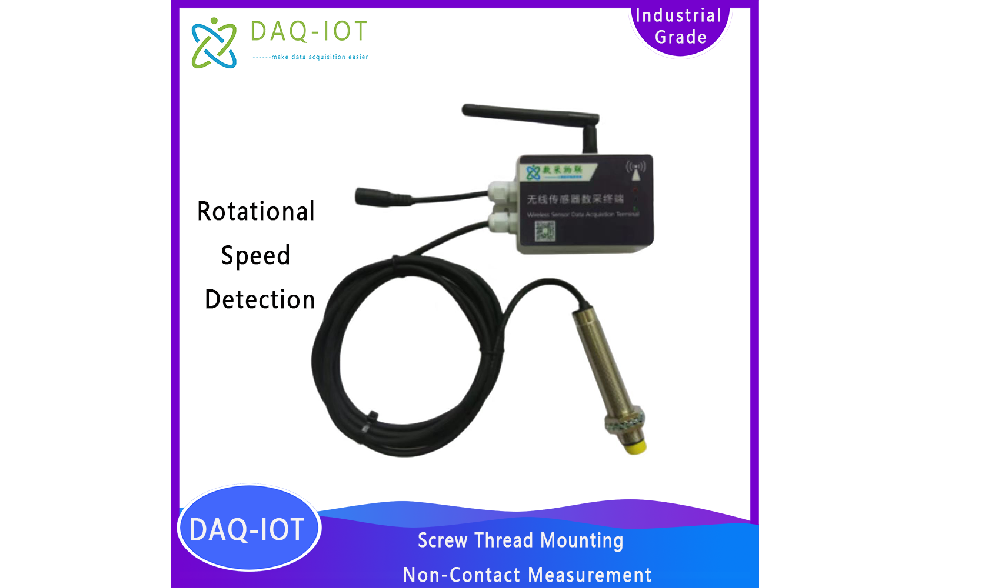
SC-GP-RPM4G wireless speed detector is a product launched by Shanghai Shucai IoT Technology Co., Ltd. It uses Hall element to sense magnetic conductors and realizes speed measurement through internal precision circuit processing. It can be used to detect the speed of various rotating machinery.
Application areas: SC-GP-RPM4G wireless speed detector can be widely used in the measurement of speed and zero speed of large rotating machinery (such as steam turbines, compressors, motors, fans, pumps) in the power, metallurgy, petrochemical and papermaking industries. It is also widely used in the fields of workpiece processing speed monitoring, steel pipe coating speed monitoring and gear speed measurement.
2 Service Concept
Our company solemnly promises:
You buy not only the product, but also the meticulous and thoughtful technical support service ! ! ! ( =^_^= )
This product only needs ordinary workers to connect the power and install it on site! No debugging is required!
We provide free remote guidance, remote configuration and debugging services, and send data to the user's designated cloud platform.
Free IoT solution consulting services!
Product characteristic parameters
2.1 Acquisition characteristics
Measuring range:
0~15000 rpm (60 measuring points per revolution)
0~30000 rpm (30 measuring points per revolution)
0~9000000 rpm (1 measuring point per revolution)
Measurement accuracy: 0.5%
Tested material: iron, magnet (other metal materials need to be specified)
2.2 Electrical Characteristics
Working power supply: DC12V
Power consumption: less than 5W
2.3 Installation Features
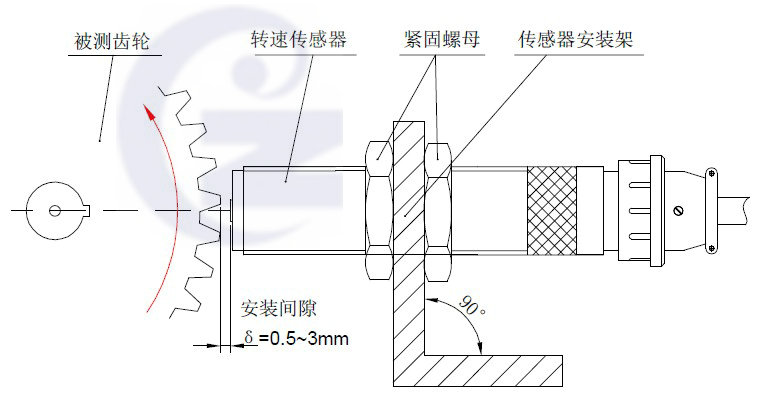
Installation clearance: 0.5 ~3mm
Installation Diagram
2.4 Communication characteristics
Wireless transmission method: NB-IOT/LoRa/WiFi
Communication protocol: MQTT/TCP/UDP/HTTP/SSL/, other protocols can be customized
Data forwarding: any public network server
Number of server centers: Supports reporting data to up to 7 cloud servers at the same time.
Heartbeat packet: supports custom heartbeat packets, which can be set to signal strength.
Registration package: supports custom registration package, which can be set to IMEI code.
2.5 Structural characteristics
Antenna type: Suction cup or rubber stick external antenna (internal antenna optional)
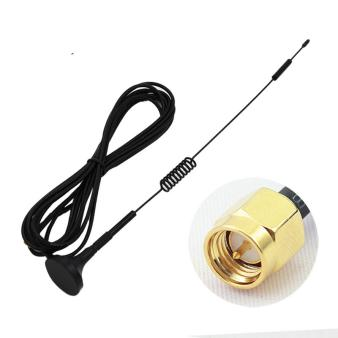 Suction cup antenna | 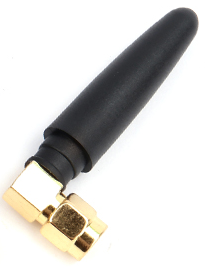
Chili glue stick antenna |
l Material: ABS plastic (shell)
l Main protection level: IP64
l Main installation method: Paste installation
2.6 Work Environment
l Temperature -30°C~75°C, humidity 0~95%
3 Core advantages of products
u Simple installation and quick deployment help IoT projects to be implemented quickly
u Supports custom registration packages and heartbeat packages to facilitate platform differentiation of devices.
u Support any IoT cloud platform and configuration software, and provide data protocol docking
u Supports Alibaba Cloud, Baidu Tiangong, OneNet, Tencent Cloud mainstream cloud platforms
u Support external multi-channel sensors
u Non-intrusive collection, does not affect the normal operation of the equipment
u Support remote configuration parameters and FOTA remote upgrade to minimize the personnel cost of on-site construction and maintenance
4 Data reporting communication protocol
4.1 Protocol analysis instructions
There are multiple push methods such as UDP/TCP/MQTT/HTTP. Users need to provide the public IP address and port number of the cloud server to receive data.
Example of a data message in JSON format:
{" IMEI ": 860344048491162 ," RotateSpeed ":254,"ICCID":"1119205006447538"}
Message analysis:
{
Speed: RotateSpeed ": 2000 r/min
"ID" : "860344048491162" //Device ID
}
Protocol reception test
The network debugging assistant NetAssist can be used to perform reception tests.
4.2 Protocol customization
If you need to customize other communication protocols, please contact our sales staff.
5 Platform docking
5.1 Default Platform
The product is connected to our company's designated open industrial Internet of Things platform by default when it leaves the factory. The platform interface is as follows:
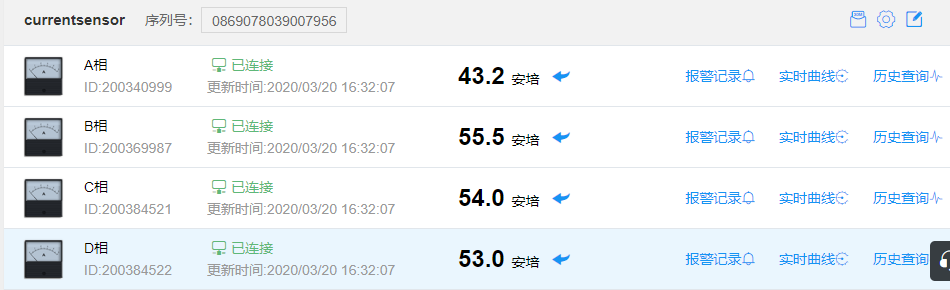
Computer browser interface
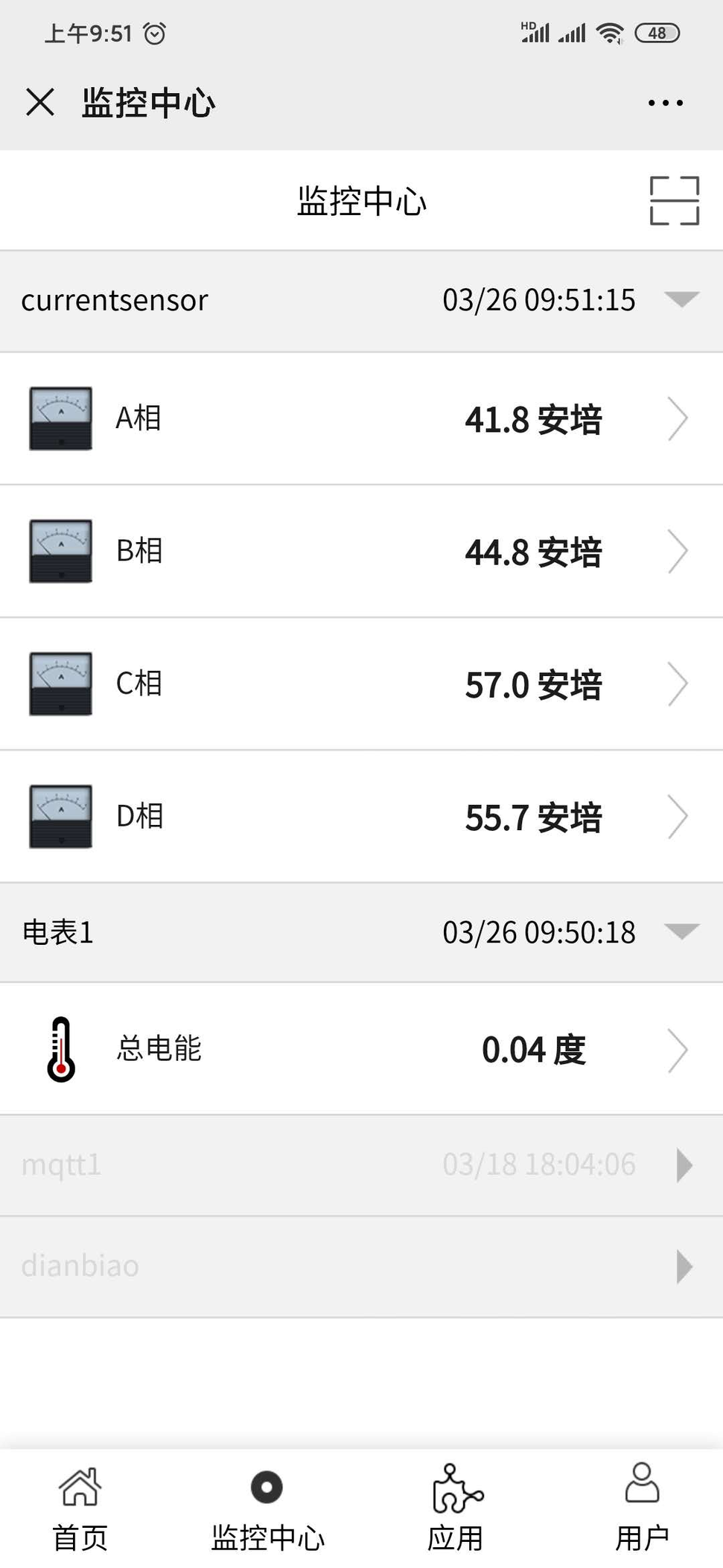
WeChat access interface on mobile phone
5.2 User-specified platform
Taking the Alibaba Cloud platform docking as an example, after the user creates a product and adds a device on the Alibaba Cloud IoT platform, the user needs to provide a triple: {ProductKey, DeviceName, DeviceSecret} and the MQTT topic to be published.
For example, the values of the triples are:
ProductKey = b0FMK1Ga5cp
DeviceName = 862991419835241
DeviceSecret = y7MTCG6Gk33Ux26bbWSpANl4OaI0bg5Q
Taking OneNet platform docking as an example, after users create products and add devices on China Mobile's OneNet platform, they need to provide the product ID and device registration code.
For example:
ID:332590
Registration code: DGRUa7Vr9KYGunwJ
6 Installation Notes
1)The product has a built-in SIM card, and the annual traffic fee is about 10~20 yuan depending on the frequency of data reporting. You can also use your own SIM card, which needs to be confirmed in advance.
❓ Wireless Speed Detector – FAQ
(For Factory / EPC / Equipment Monitoring Projects)
1. What is a wireless speed detector used for in industrial applications?
It is used to monitor the rotational or linear speed of industrial equipment such as motors, conveyors, fans, pumps, and turbines in real time.
2. Can it be used in factory automation systems?
Yes. It is widely used in smart factories and industrial automation systems to monitor equipment speed and ensure stable production performance.
3. How does the device transmit data?
It supports wireless communication such as LoRa, NB-IoT, 4G, or WiFi, allowing real-time data transmission to IoT platforms or SCADA systems.
4. Is it suitable for EPC projects?
Yes. It is commonly used in EPC engineering projects for equipment monitoring, system integration, and industrial performance optimization.
5. Does it require complex wiring for installation?
No. The wireless design allows fast installation without cable wiring, reducing engineering time and installation costs.
6. Can it integrate with SCADA or industrial IoT platforms?
Yes. The device can be easily integrated into SCADA, EMS, and IoT platforms for centralized monitoring and data analysis.
7. What types of equipment can it monitor?
It can monitor speed for motors, pumps, conveyors, fans, compressors, turbines, HVAC systems, and other rotating machinery.
8. Is it suitable for harsh industrial environments?
Yes. It is designed for industrial-grade environments, including vibration, dust, temperature variation, and outdoor installations.
9. Can it support predictive maintenance?
Yes. Real-time speed data helps detect abnormal operation early, enabling predictive maintenance and reducing unexpected downtime.
10. What industries typically use this device?
It is widely used in manufacturing plants, EPC projects, power plants, mining, oil & gas, and smart factory systems.
💰 Inquiry & Purchase (Core Conversion)
 ch
 English