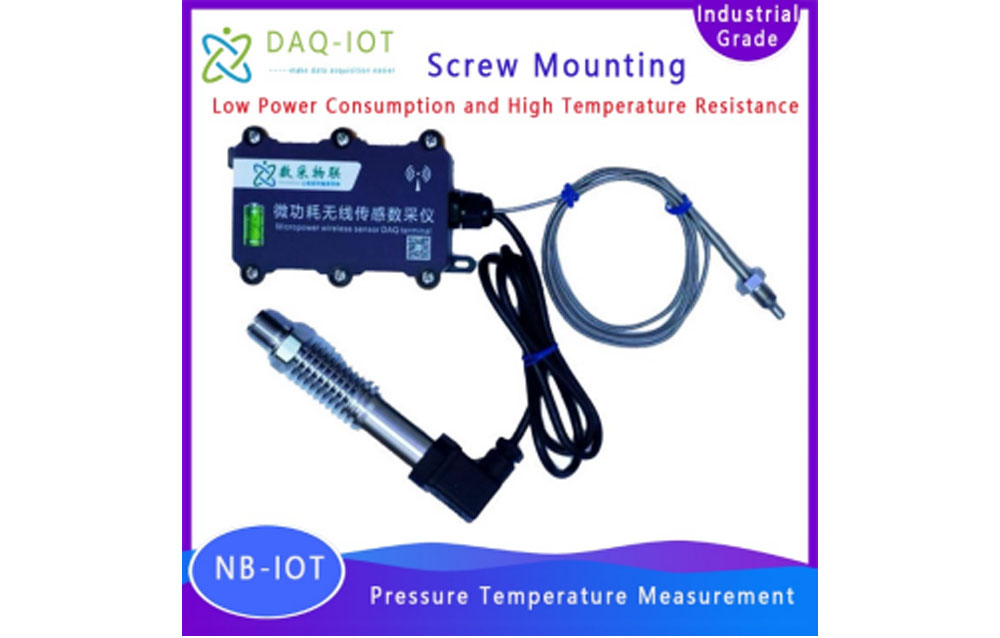
1 Product Introduction
DAQ-LP-PTNB is a high temperature resistant wireless temperature and pressure sensor terminal developed by Shanghai Data Acquisition IOT Technology Co., LTD. This product is mainly used in high temperature pipeline temperature and pressure measurement. Data can be reported wirelessly to the specified platform server periodically.
The terminal adopts NB-IOT/LoRa communication mode to overcome the wireless communication block caused by the special environment of the site, greatly simplifying the site deployment time and reducing the construction cost. Device working states include hibernation, collection and storage, and activation and reporting.

2 Service Concept
We solemnly promise that:
What you buy is not only the product, but also the meticulous and thoughtful technical support services!!!( =^_^= )
This product, the site only ordinary workers connected to electricity installation! No debugging!
We provide free remote guidance, remote configuration and debugging service, and send the data to the user-specified cloud platform.
Free Internet of Things solution consulting services!
3 Product Features
3.1 Acquisition Characteristic
Collection Type:pressure, temperature
Measuring Range: 0-2.5mpa, -50-500℃ (other measuring ranges can be customized))
Collection Frequency: 1 second to 24 hours. Remote configuration is supported
Accuracy Class: 0.2 degrees
Maximum Input: 100%(continuous)/150%(1 min)
3.2 Electrical Character
Power Supply: Battery power supply or 12V
Battery Capacity:3.6V*19Ah
Standby Power Consumption:less than 5uA@3.6V
Power Consumption:2~3mA@3.6V
Transmission Power Consumption:50~100mA@3.6VV
3.3 Communication Characteristics
Antenna Type:Built-in antenna
Transmission Mode:4G/NB-IOT/LoRa
Communication Protocol: MQTT/HTTP post Active push
Data Forwarding: any public network server
Data reporting methods: 1. When the temperature and pressure fluctuation is greater than or equal to the set value; 2. Report the current measured value according to the set interval
3.4 Structural Property
Material: PC plastic (enclosure)
Main Protection Level: IP65
Main Body Size:120mm×78mm×50mm
Transformer Probe Structure: threaded type
Main Mounting Method: wall hanging or screw fastening
Instrument Transformer Probe Installation Method: insert installation
3.5 Work Environment
Temperature: -25°C~75°C,Humidity: 0~95%(non-condensing)
4 Micropower Operating Mode
The wireless temperature and pressure sensor terminal achieves the effect of power saving by intermittent operation. The device is in standby state most of the time, and only a small part of the circuit continues to work to maintain the state of micro power consumption. This part of the circuit will ensure the correct operation of the system time and the correct record of the next activation time.
Daily power consumption calculation of the device: The daily working state is divided into standby state and working state (wake up to collect data and upload data through 4G/NB-IOT), which correspond to the power consumption data of different states.
5 Product Core Advantages
Ø Built-in battery, no wiring required
Ø Simple installation, fast deployment, help the Internet of things project quickly landing.
Ø Support any Internet of Things cloud platform and configuration software, and provide data protocol docking.
Ø The whole machine is waterproof and moisture-proof design to meet the working requirements in harsh environment.
Ø Supports remote configuration, minimizing onsite maintenance costs.
6 Data Reporting Communication Protocol
6.1 Protocol Parsing Instructions
In HTTP post push mode, users need to provide the URL for receiving http data.
6.2 Protocol Interconnection Test
Postman debugging can be used.
6.3 Protocol Customization
If you need to customize other docking protocols, such as MQTT, docking configuration software, etc., you can contact the business personnel to communicate.
7 Platform Docking
7.1 Platform Data Display
Products can choose to connect to our designated open industrial Internet of Things platform, the platform interface is as follows: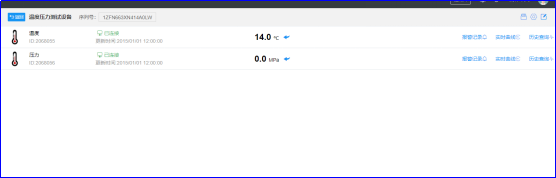
Computer side browser interface
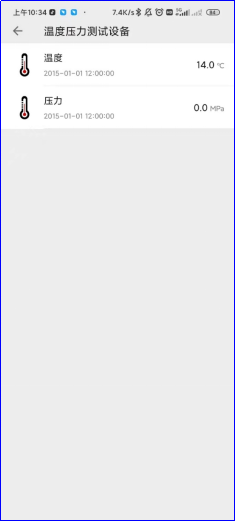
Mobile terminal wechat access interface
7.2 The User Specifies the Platform
Default connection to Telecom IOT platform. Other platforms can be customized.
8 Application Cases
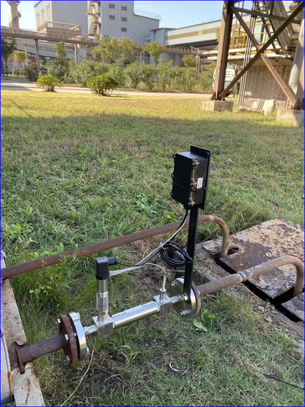
By monitoring changes in pressure and temperature, the steam pipeline is monitored for leakage. Near the leak location, the pressure and temperature will decrease significantly.
 ch
 English